
Items related to Finding Forgiveness: A 7-Step Program for Letting Go...
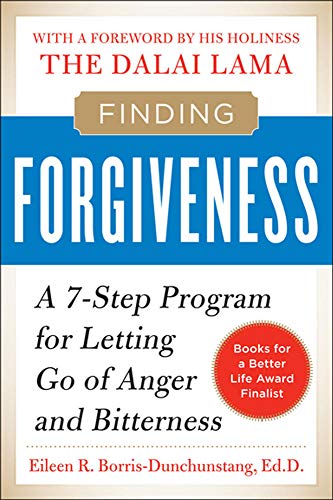
Finding Forgiveness: A 7-Step Program for Letting Go of Anger and Bitterness (NTC SELF-HELP) - Softcover
Synopsis
Free yourself from anger, pain, and the past
Have you ever felt betrayed, hurt, or wronged? Are you struggling to get over a nasty divorce, the death of a loved one, a shattered friendship, or broken family ties? This book will help you deal with conflicted emotions and find it in your heart to forgive. Written by Dr. Eileen R. Borris-Dunchunstang, an internationally known speaker on conflict resolution and trauma recovery, Finding Forgiveness offers a remarkably sensitive yet powerful approach to healing your heart, lifting your spirit, and finding the power to love, grow, and forgive.
The 7 Steps Toward Forgiveness
- Clear your mind of negative thoughts that get in the way of your happiness.
- Uncover your feelings of bitterness, betrayal, victimization, and blame.
- Let go of your anger and move on with your life.
- Work through your guilt and learn to forgive yourself as well as others.
- Reframe the situation that hurt you and restore your faith in others.
- Absorb the pain of the past without the need for apologies or revenge.
- Gain inner peace through newfound compassion, understanding, and acceptance.
"synopsis" may belong to another edition of this title.
About the Author
McGraw-Hill authors represent the leading experts in their fields and are dedicated to improving the lives, careers, and interests of readers worldwide
Excerpt. © Reprinted by permission. All rights reserved.
FINDING FORGIVENESS
A 7-Step Program for Letting Go of Anger and Bitterness
By Eileen R. Borris-DunchunstangThe McGraw-Hill Companies, Inc.
Copyright © 2007 McGraw-Hill Companies, Inc.
All rights reserved.
ISBN: 978-0-07-171375-7All rights reserved.
Contents
| Foreword by His Holiness the Dalai Lama | |
| Acknowledgments | |
| Introduction Why Should We Forgive? | |
| 1 How Do We Forgive? | |
| 2 Learning to Forgive | |
| 3 Beginning the Journey | |
| 4 Developing Patience | |
| 5 "Poor Me" | |
| 6 Working with Anger | |
| 7 Understanding the Impact of Guilt | |
| 8 Stop Running and Face Your Guilt! | |
| 9 Releasing Our Pain | |
| 10 Listening Within | |
| 11 Breaking Cycles of Violence | |
| 12 The Power of Love | |
| 13 A Justice That Heals | |
| 14 With Love We Can Heal the Future | |
| 15 What You Can Do for Yourself | |
| References | |
| Resources | |
| Index |
Excerpt
CHAPTER 1
How Do We Forgive?
"The knowledge that illuminates not only sets you free, but also showsclearly that you are free."
—A Course in Miracles
Throughout our lives most of us have been taught about forgiveness. Each one ofus thinks differently about what forgiveness means, ranging from emotionalweakness to high moral standards. To be able to forgive, we need to understandwhat forgiveness means. Otherwise, our misconceptions can become obstacles inour ability to forgive.
Forgiveness is a process that shows us how to heal emotional pain by choosing tosee the person who caused the pain differently. It is about changing the way wethink about ourselves and the way we see the world. Forgiveness is an essentialpart of our healing, enabling us to release our anger, pain, andsuffering. As we learn to forgive and heal our emotional pain, we begin toexperience the gift of inner peace.
Forgiveness is not about letting someone get away with murderous acts. It isabout asking us to look at the totality of who we are, to accept theshortcomings within ourselves, and to embrace that truth with compassion,understanding, and unconditional love. As we face ourselves with courage andacceptance, we get in touch with our humanity and vulnerabilities. This gift ofself-acceptance helps us grow in understanding and compassion, which we canthen, ideally, extend to others.
There are many misconceptions concerning forgiveness. For example, many of usbelieve that we forgive in order to repair the relationship with the offender.Although this can be an outcome, the relationship that we are repairing is thatwithin ourselves. Another misconception is that if we forgive someone, we cannotseek forms of justice. As we shall learn, forgiveness is about creatingattitudinal changes within ourselves. Our outer actions may be the same whetherwe forgive or not. What is important is the motivation behind the actions wechoose to take.
From its inception, forgiveness involved a process that required a change inperceptions and judgments. Changing perceptions directly effects the healing ofanger and hatred. In our willingness to see the situation differently, theseemotions begin to diffuse to the point that we no longer want to act outrevenge. As we face truths about ourselves that make it possible for us to seeothers differently, we are taking the first steps in becoming more compassionatehuman beings. This brings us to a point where, because of our own development ofcompassion, we are willing to help others regardless of whether there has beenacknowledgement from the offender.
Forgiveness is a voluntary act in which a person makes adecision—a choice—about how he or she will deal withan event concerning the past. One of these choices may be based on the beliefthat people can judge events, measure the magnitude of an offense, and decidethat receiving an equal amount of retribution somehow balances the account(Hope, 1987). Another choice is to practice an attitude of forgiveness. Thisattitude allows us to let go of anger and resentment by deciding to absolve whatwe perceive as wrongs committed by the other (Hope, 1987). This involvesrecognizing how our attitudes and beliefs color the actual situation. We formour attitudes and beliefs based on our judgments and perceptions. Judgments andperceptions are based on our fears and needs at the time of the event. They arenot facts, although we want to interpret them as such. The attitude offorgiveness is founded on the understanding that we screen and create the pastthrough the process of judgment in the same way that we screen and create thepresent through the process of perception, and that our judgments andperceptions are subjective and unreliable (Hope, 1987). Therefore, it is throughour filters of judgment and perception that we dictate our reality and not ourdeeper understanding of the actual event.
There are a few important points to make about this definition. First, those whoforgive must have suffered a deep hurt, such as betrayal, that elicits angerand/or resentment. Although it is clear that those offended have a right to thisresentment, they choose to overcome it. There are many reasons peoplemake this choice. It could be they want to move on with their lives, theyrecognize that by holding on they are giving the perpetrator power, or theyrealize that by wanting revenge they become just like the perpetrator. Whateverthe reason for this choice, a new response emerges that results in achange in perception based on understanding, compassion, and/or love. Theseresponses occur because of the offended person's choice, not his obligations.The paradox is that as people let go of their feelings of anger, hatred, or theneed for revenge, it is they who are healed. By accepting and coming toterms with what took place, those who can see the situation from a perspectiveof understanding and compassion can lay the past to rest and experience innerpeace.
There are many complexities and misunderstandings concerning forgiveness thatare important to clarify. The first point to understand is that forgiveness canonly occur between two people. We cannot forgive a natural disaster or a warbecause forgiveness is about resolving the misperceptions we have projected onsomeone else. It is about healing a deep psychological injury we believe someonedid to us. If we did not personally experience harm from someone else then weare not in a position to forgive.
One of the more difficult concepts to understand about forgiveness deals withperceptions. Perceptions are our views in how we choose to see the world. We allsee the world differently according to our chosen lens. The events in our livesthat are otherwise neutral derive meaning according to how we perceive what hashappened. That is why two people can experience similar hurts but one gets stuckin the victim role while the other becomes empowered and takes action. Ourreactions are based on our unconscious motivation. This unconscious motivation,be it guilt or fear, is colored by thoughts about ourselves that are too painfulto acknowledge. What we cleverly do is sweep the negative thoughts we hold aboutourselves under the carpet by only seeing these things in other people. This iswhat the psychological term projection means. We place on others what wedon't want to see about ourselves. These lenses, which also serve as filters forour unconscious needs and desires, give meaning to our life events. This dynamicis important to understand because it explains how we create enemies of peoplewe instantly do not like. It also explains why we can be standing in a hotellobby and see someone we don't know, yet automatically decide we don't like thatperson. Part of the forgiveness process is to recognize our projections andreclaim them. In accepting the rejected aspects of ourselves, we begin to seethe world more clearly. We cannot change the event itself, but we can change theway we see it. This is part of the forgiveness process.
An issue intertwined with forgiveness is justice. Most often we call for justicebased on retribution. When we can finally understand forgiveness at its deepestlevel, we also get a deeper understanding of what is taking place within theperpetrator. We understand that just like us, other people's behavior is basedin their woundedness, fear, and guilt. We recognize that twistedbehavior is a call for help, and so it is help we need to give. That doesn'tmean that we don't take the necessary actions to protect ourselves, but justicetakes on a new meaning—a restorative one—when we begin to see theworld differently, through the eyes of forgiveness.
Another difficult aspect of forgiveness deals with the issue of apology. Manypeople believe that it is necessary to receive an apology before they canforgive. Because forgiveness is about our inner healing, it is notdependent on an apology from someone else. Therefore, we do not need to havesomeone apologize to us. If we were dependent on an apology from someone else,we would become trapped in a state of unforgiveness, experiencing prolongedanger and pain (Enright, et al., 1992). This is where the power of forgivenesslies. Forgiveness is the gift from someone who has been hurt to give when thereis a healing. Making the choice to forgive is part of the healing process thatonly comes from within.
Ultimately, forgiveness is about changing the way we think. Its transformationalpower moves us from being helpless victims of our circumstances to powerfulcocreators of our reality. We learn to see people anew every day in terms oftheir future potential, not their past deeds. In becoming more loving,compassionate, and understanding human beings, we gain the ability to have adeeper relationship with ourselves and with the significant people in our lives.
Rethinking Forgiveness
In order to attain a better understanding of forgiveness, we have to clear upsome common misperceptions that many people hold about its meaning. Some ofthese misperceptions focus on the terms pardoning, condoning, andreconciliation (Mawson and Whiting, 1923).
* Forgiveness is not pardoning. Forgiveness is an inner emotionalrelease. Pardoning is a public behavioral release. To pardon someone usuallyinvolves an authority who oversees laws by which the degree of punishment isestablished for each violation. If a person breaks the law and his punishment isreduced or suspended, there is a pardon. When officials pardon someone for theirwrongdoing, they always reassert that wrong was done. The Hebrew-Christiantradition long ago understood forgiveness in this light (Frost, 1991). It is away of affirming norms in the very process of seeking to lift from wrongdoersthe full penalty due for breaking the norms. Here lies the misunderstanding offorgiveness. To forgive the wrongdoer does not mean that we abolish thepunishment for what was done.
* Forgiveness is not condoning. Certain behaviors such as unprovokedviolence, abuse, and aggression are totally unacceptable. Sometimes the mostcompassionate acts require taking action to stop the behaviors and to preventthem from happening again. Forgiveness does not mean that you support behaviorsthat cause pain to yourself or others. It does not mean that you don't takeaction to change a situation or protect yourself or others. Remember,forgiveness is a process that happens internally on a personal level. We donot have to accept someone else's behavior in order to forgive.
* Forgiveness is not reconciliation. Forgiveness is a personal, internalrelease that only involves oneself. Forgiveness may be a necessary step inbringing people together to reconcile and includes a willingness to reconcile,but it only involves ourselves. Reconciliation is a coming together of two ormore people. We can forgive someone and demonstrate that in our behavior, but wemay not reconcile until changes in the offender's behavior take place. Wecan forgive someone, but it does not mean we have to reconcile.
Some people believe that those who forgive are emotionally weak and fearful,without the courage to do what is "right" and necessary. They believe thatforgiveness and strength cannot coexist within an individual. Yet, it is thosepeople who cannot forgive who truly live with fear. Forgiveness is notabout weakness and giving into the "strengths" of others. Forgiveness is aboutfinding the strength in ourselves to see beyond the immediate harm inflictedupon us by others (and even ourselves), discovering the weaknesses that causeharm, and forgiving those shortcomings. Forgiveness is about seeing thehumanness in others, seeing beyond their surface actions and realizingtheir pain that causes such actions.
It takes a generous spirit to understand that people do not always hurt usbecause they choose to. Oftentimes, they have no more control over their actionsthan we, their victims, do. Only from our wisdom and compassion can we recognizethat when people harm us, it is their weaknesses that compell them toact. People who attack us act out of fear to protect themselves. Fear drives usinto a hard shell. It shuts the door on our capacity to understand, empathize,and love, while allowing distrust and enmity to guard against being touched fromthe outside world. The truth is that behind the plague of violence and war liesconfusion about ourselves, including the painful guilt we sense about our ownfailings. To compensate for this perception, we often harden ourselves so thatothers cannot gain access to our inner selves or discover our shortcomings.
The fact that we are struggling against our own unconscious feelings about ourpersonal inadequacies and evils only makes us more desperate, destructive, and,ultimately, more self-destructive and leaves us with the unhealed wounds of ourperceptions. The prospect of having to confront unbearably frightening aspectsof our experience sometimes even leads to excessive outward violence. From thisunhealed place, we find the acts of criminals committing random crimes,including individuals who hurt children or who commit war crimes. Suchdestructive behavior is evident not only from individuals, but it also can befound in the more global interactions of communities acting against othercommunities.
Forgiveness is a process that engages us in a search for significance notreadily apparent to us by outward appearances. As we begin to look beneath thesurface, we develop an understanding of hidden forces that we did not recognizebefore. We realize that within all of us is hidden bad and good, both of whichhave to be brought to the surface and dealt with. We are so accustomed to thedoctrine of inherent sinfulness that we overlook our inherent goodness—ourinnate divinity. In fact, the tendencies of the majority of people arepredominantly good. Forgiveness is about finding the unique good in ourselvesand others and letting go of judgments that consequently predispose us towardharshness in our view of others. In suspending judgment, we experience the unityof life instead of defining the world in terms of opposites. We remember theconnection to a greater source of being in which we know that no man is the"other." Forgiveness provides us the opportunity to recognize and strive towardthe practical realization of what we innately are—good, caring people.
The Forgiveness Process
Forgiveness is a process that happens over time. Following the initial injury,we experience pain or anger. We can feel a loss of personal control. At times,we psychologically replay the hurt over and over so that the pain deepens. Thenwe compare the hurt to the perceived lack of pain of the offender's experience.We invariably come to the conclusion that life is not fair and that the world isnot just. As the injured persons, we slowly deal with the anger and begin togain insight into the behavior of the perpetrator, and we give meaning to theevent. When we can finally let go of our pain we begin to heal.
Before we can truly forgive, we need to realize that forgiveness is aboutour inner healing and not necessarily about behavioral change. Untilthen we may needlessly deal with resistance about forgiving someone.
We heal by remembering, by bringing back into our awareness everything we havekept hidden from ourselves. It takes time to bring all these pieces together.This process begins by telling our story and validating our feelings andexperiences. Too often, because of the pain and cutting of a deep wound, wegloss over a traumatic event at the time it happens. There is a tendency to setup psychological defense mechanisms that separate us from the pain we feel.Telling our story can help us reconnect with this pain so that we can eventuallybe freed from it.
Sometimes the pain we desperately deny resurfaces in various ways, such as angeror hatred toward the person who has hurt us. In order to forgive the person wehave to listen to our anger and other strong emotions and learn to understandwhat they are telling us. Only after time and being in a safe environment can weallow ourselves to feel and express our strong emotions and to explore theissues concerning our pain and circumstances. As we become more aware andaccepting of all our emotions as valid messengers about our interaction in theworld, we begin our healing. And if someone is willing to listen to us and shareour pain and sorrow, the burden becomes lighter and even bearable.
After we focus attention on our emotions, especially anger, and understand itsmeaning, it is very important to look at our reactions to pain and how we may besubtly nurturing our pain. If we are holding onto something, we need torecognize that, despite any other person's role in creating the situation, weare responsible for what we do with the hurt. Forgiveness is about acceptingresponsibility for our emotional reactions to our hurt. We need to let go of thefeelings from the past, especially those that nurture our pain, and experiencethe power that comes from their release This growth requires that we remove theobstacles created by our anger and guilt and deal with them appropriately byfacing them, however painful and difficult this may be. It may also require therecognition that what we have condemned in another is indeed what we havecondemned in ourselves. Because this is sometimes too painful for us toacknowledge about ourselves, we see shortcomings only in someone else and not inourselves, thus diverting our attention from the true source of the problem.
As we bring our shortcomings to our awareness, it is normal and expected for usto have feelings of guilt. However, unhealthy guilt causes us to reject our ownworth as human beings. It causes us to retreat from life with the need to avoidfear rather than engage in life in a loving way. When guilt takes over our life,our faults and fears seem to stand out at the expense of our joys and pleasures.Unhealthy guilt keeps us stuck in our feelings of presumed unworthiness, and wehurt others because of this.
(Continues...)
(Continues...)
Excerpted from FINDING FORGIVENESS by Eileen R. Borris-Dunchunstang. Copyright © 2007 by McGraw-Hill Companies, Inc.. Excerpted by permission of The McGraw-Hill Companies, Inc..
All rights reserved. No part of this excerpt may be reproduced or reprinted without permission in writing from the publisher.
Excerpts are provided by Dial-A-Book Inc. solely for the personal use of visitors to this web site.
"About this title" may belong to another edition of this title.
Search results for Finding Forgiveness: A 7-Step Program for Letting Go...

Stock Image
Finding Forgiveness: A 7-Step Program for Letting Go of Anger and Bitterness
Published by
McGraw Hill (edition 1), 2010
ISBN 10: 0071713751
ISBN 13: 9780071713757
Used
Paperback
Seller: BooksRun, Philadelphia, PA, U.S.A.
Seller rating 5 out of 5 stars

Paperback. Condition: Fair. 1. The item might be beaten up but readable. May contain markings or highlighting, as well as stains, bent corners, or any other major defect, but the text is not obscured in any way. Seller Inventory # 0071713751-7-1
Stock Image
Finding Forgiveness: A 7-Step Program for Letting Go of Anger and Bitterness
Seller: World of Books (was SecondSale), Montgomery, IL, U.S.A.
Seller rating 5 out of 5 stars
Condition: Very Good. Item in very good condition! Textbooks may not include supplemental items i.e. CDs, access codes etc. Seller Inventory # 00109281201
Stock Image
Finding Forgiveness: A 7-Step Program for Letting Go of Anger and Bitterness
Seller: ThriftBooks-Atlanta, AUSTELL, GA, U.S.A.
Seller rating 5 out of 5 stars
Paperback. Condition: Good. No Jacket. Pages can have notes/highlighting. Spine may show signs of wear. ~ ThriftBooks: Read More, Spend Less. Seller Inventory # G0071713751I3N00
Stock Image
Finding Forgiveness: A 7-Step Program for Letting Go of Anger and Bitterness
Seller: ThriftBooks-Dallas, Dallas, TX, U.S.A.
Seller rating 5 out of 5 stars
Paperback. Condition: Very Good. No Jacket. May have limited writing in cover pages. Pages are unmarked. ~ ThriftBooks: Read More, Spend Less. Seller Inventory # G0071713751I4N00
Stock Image
Finding Forgiveness: A 7-Step Program for Letting Go of Anger and Bitterness
Seller: ThriftBooks-Dallas, Dallas, TX, U.S.A.
Seller rating 5 out of 5 stars
Paperback. Condition: Good. No Jacket. Pages can have notes/highlighting. Spine may show signs of wear. ~ ThriftBooks: Read More, Spend Less. Seller Inventory # G0071713751I3N00
Stock Image
Finding Forgiveness: A 7-Step Program for Letting Go of Anger and Bitterness
Seller: ThriftBooks-Atlanta, AUSTELL, GA, U.S.A.
Seller rating 5 out of 5 stars
Paperback. Condition: Very Good. No Jacket. May have limited writing in cover pages. Pages are unmarked. ~ ThriftBooks: Read More, Spend Less. Seller Inventory # G0071713751I4N00
Stock Image
Finding Forgiveness: A 7-Step Program for Letting Go of Anger and Bitterness
Seller: ThriftBooks-Phoenix, Phoenix, AZ, U.S.A.
Seller rating 5 out of 5 stars
Paperback. Condition: Very Good. No Jacket. May have limited writing in cover pages. Pages are unmarked. ~ ThriftBooks: Read More, Spend Less. Seller Inventory # G0071713751I4N00
Stock Image
Finding Forgiveness: A 7-Step Program for Letting Go of Anger and Bitterness
Seller: ThriftBooks-Reno, Reno, NV, U.S.A.
Seller rating 5 out of 5 stars
Paperback. Condition: Very Good. No Jacket. May have limited writing in cover pages. Pages are unmarked. ~ ThriftBooks: Read More, Spend Less. Seller Inventory # G0071713751I4N00
Stock Image
Finding Forgiveness: A 7-Step Program for Letting Go of Anger and Bitterness
Seller: ThriftBooks-Reno, Reno, NV, U.S.A.
Seller rating 5 out of 5 stars
Paperback. Condition: Good. No Jacket. Pages can have notes/highlighting. Spine may show signs of wear. ~ ThriftBooks: Read More, Spend Less. Seller Inventory # G0071713751I3N00
Seller Image
Finding Forgiveness: A 7-Step Program for Letting Go of Anger and Bitterness
Seller: Blue Vase Books, Interlochen, MI, U.S.A.
Seller rating 5 out of 5 stars
Condition: acceptable. The item is very worn but is perfectly usable. Signs of wear can include aesthetic issues such as scratches, dents, worn and creased covers, folded page corners and minor liquid stains. All pages and the cover are intact, but the dust cover may be missing. Pages may include moderate to heavy amount of notes and highlighting, but the text is not obscured or unreadable. Page edges may have foxing age related spots and browning . May NOT include discs, access code or other supplemental materials. Seller Inventory # BVV.0071713751.A