
Items related to The Voyager's Handbook: The Essential Guide to...
Synopsis
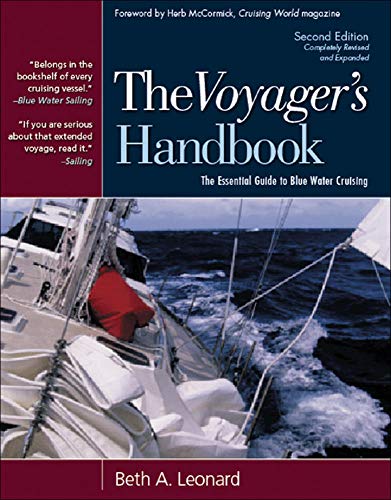
“Belongs in the bookshelf of every cruising vessel.”―Blue Water Sailing
“If you are serious about that extended voyage, read The Voyager’s Handbook.”―Sailing
“Every now and then a new voice emerges in the world of sailing literature that stands out, a voice that is both clear and of lasting quality. The appearance of such a new voice is something of an event, and that’s what we’d call the publication of The Voyager’s Handbook.”―Blue Water Sailing
This inspirational and comprehensive manual leads you step by step through every aspect of choosing, planning, and following the voyager’s life. Using three example boats representing three cruising lifestyles―Simplicity, Moderation, and Highlife―Beth Leonard helps make your bluewater dreams come true, whether you’re sailing on a shoestring or a CEO’s pension.Starting with the things you can’t do without―an enthusiastic crew, a seaworthy boat, and, of course, money―Leonard offers sage advice on how to select crewmembers who are truly committed to the voyage, how to choose the right boat for you, and how to find just the right approach to financing your voyage and making the most of every dollar spent.
Managing life from a floating home and keeping that home livable, seaworthy, and safe requires you to become, among other things, the ship’s purser, engineer, doctor, cook, and cruise director. You’ll discover how to prepare for these new roles and put necessary equipment and arrangements in place before you untie your docklines.This exquisitely detailed guide also helps you master the skills you’ll need to handle a boat at sea with a small crew, including
- Weather forecasting
- Passage planning
- Watchkeeping
- Heavy-weather sailing
- Emergency management
- Midocean repairs
Complete with dozens of easy-to-use graphs and tables for quick reference, along with the hard-won wisdom of experienced cruisers, The Voyager’s Handbook is the ultimate resource for anyone who is planning, preparing for, or just dreaming about a great adventure on the high seas.
"synopsis" may belong to another edition of this title.
About the Author
Beth A. Leonard and her partner, Evans Starzinger, left high-powered international management consulting jobs in 1992 and set sail aboard their Shannon 37 ketch, Silk, on a circumnavigation that they completed 35,000 miles and 3 years later. Within a few months of returning to shore they realized they could no longer fit into their old lives. What was to have been a sabbatical became instead a permanent new life. It took them 4 years to build an aluminum sloop capable of sailing the high latitudes, and they spent the next six years sailing Hawk to the ends of earth, from the high Arctic to Cape Horn. They have won awards from the Ocean Cruising Club (UK) and the Cruising Club of America, and were members of U.S. Sailings Safety at Sea committee from 2002 through 2004.
From the Back Cover
"Belongs in the bookshelf of every cruising vessel."--Blue Water Sailing
"If you are serious about that extended voyage, read The Voyager's Handbook."--Sailing
"Every now and then a new voice emerges in the world of sailing literature that stands out, a voice that is both clear and of lasting quality. The appearance of such a new voice is something of an event, and that's what we'd call the publication of The Voyager's Handbook."--Blue Water Sailing
This inspirational and comprehensive manual leads you step by step through every aspect of choosing, planning, and following the voyager's life. Using three example boats representing three cruising lifestyles--Simplicity, Moderation, and Highlife--Beth Leonard helps make your bluewater dreams come true, whether you're sailing on a shoestring or a CEO's pension. Starting with the things you can't do without--an enthusiastic crew, a seaworthy boat, and, of course, money--Leonard offers sage advice on how to select crewmembers who are truly committed to the voyage, how to choose the right boat for you, and how to find just the right approach to financing your voyage and making the most of every dollar spent.
Managing life from a floating home and keeping that home livable, seaworthy, and safe requires you to become, among other things, the ship's purser, engineer, doctor, cook, and cruise director. You'll discover how to prepare for these new roles and put necessary equipment and arrangements in place before you untie your docklines. This exquisitely detailed guide also helps you master the skills you'll need to handle a boat at sea with a small crew, including
- Weather forecasting
- Passage planning
- Watchkeeping
- Heavy-weather sailing
- Emergency management
- Midocean repairs
Complete with dozens of easy-to-use graphs and tables for quick reference, along with the hard-won wisdom of experienced cruisers, The Voyager's Handbook is the ultimate resource for anyone who is planning, preparing for, or just dreaming about a great adventure on the high seas.
Since completing a three-year, 35,000-mile circumnavigation of the globe with her partner, Evans Starzinger, in 1995, Beth Leonard has lectured widely, written for leading sailing magazines, and outfitted a new 50-foot aluminum cutter aboard which she and Evans once again set sail in 1999. They logged an additional 50,000 miles at sea over the following six years, much of it in the world's high latitudes, including Labrador, Iceland, Scotland, Cape Horn, and east through the Southern Ocean to Australia.
See the world from your boat
"A voyaging handbook with soul. Beth Leonard is a pleasure to read. No one else has captured the yin and yang of voyaging so well."--Caribbean Compass
"Required reading. Beth Leonard is a fresh and authoritative voice."--SAIL
"In her own journey, Beth Leonard has become not only a wonderful sailor, but also a fine teacher. I know this because I've learned so much from her."--from the Foreword by Herb McCormick, Latitude 38 and Cruising World
"When other boats scurry back to their berths just ahead of the setting sun, you want to keep sailing. You want your tracks to be the only ones on a perfect sand beach of a deserted tropical island. You want to see the green flash, taste coconut milk from the husk, watch the fish dance at dusk, and share a feast with new friends from other cultures. This book can help you get there. It is written for coastal and limited offshore cruisers who want to make the transition to long-term voyaging. I have tried to capture everything I wish I had known on that June day when we first sailed out from under Newport Bridge."--from the Prologue by Beth Leonard
Excerpt. © Reprinted by permission. All rights reserved.
The Voyager's Handbook
THE ESSENTIAL GUIDE TO BLUEWATER CRUISING
By Beth A. LeonardThe McGraw-Hill Companies, Inc.
Copyright © 2007 Beth A. Leonard
All rights reserved.
ISBN: 978-0-07-143765-3All rights reserved.
Contents
| Foreword to the Second Edition by Herb McCormick | |
| Foreword to the First Edition by George Day | |
| Preface | |
| Acknowledgments | |
| Introduction | |
| Part I The Essential Ingredients | |
| Chapter 1 Committed Crew | |
| Chapter 2 Adequate Financing | |
| Chapter 3 A Bluewater-Capable Yacht | |
| Part II Refitting and Equipping the Yacht for Bluewater Voyaging | |
| Chapter 4 Upgrading for Offshore | |
| Chapter 5 Sails and Sail Handling | |
| Chapter 6 Anchors, Anchoring, and Mooring | |
| Chapter 7 On-Deck Essentials: Dinghies, Self-Steering, and Safety Gear | |
| Chapter 8 Other Equipment: Navigation, Communications, and Comforts and Conveniences | |
| Chapter 9 Configuring Your Electrical System | |
| Chapter 10 Putting It All Together: From Refit Plan to Balanced Boat | |
| Part III Liveaboard Skills | |
| Chapter 11 Liveaboard Essentials: What to Bring and How to Stow It | |
| Chapter 12 Managing Life Afloat | |
| Chapter 13 Better Boatkeeping | |
| Chapter 14 Galleywise | |
| Chapter 15 Staying Safe: Lessons Learned Over 90,000 Nautical Miles | |
| Chapter 16 Staying Healthy: Being Your Own Doctor | |
| Chapter 17 Staying Challenged: Following Your Heart | |
| Part IV Shorthanded Passagemaking Skills | |
| Chapter 18 Global Weather Patterns and Voyage Planning | |
| Chapter 19 Weather Basics and Onboard Forecasting | |
| Chapter 20 Preparing for Passage | |
| Chapter 21 Basic Passage Routines | |
| Chapter 22 Heavy Weather | |
| Chapter 23 Toward Self-Reliance: Managing Emergencies at Sea | |
| Chapter 24 Toward Seamanship: Efficient Passagemaking | |
| Part V Foreign Savvy | |
| Chapter 25 Upon Arrival | |
| Chapter 26 Enjoying Being There | |
| Chapter 27 The Voyaging Life: Keeping the Faith | |
| Appendices | |
| Appendix 1 Additional Resources | |
| Appendix 2 Conversions | |
| Appendix 3 Performance Measurements Explained | |
| Appendix 4 Upgrades for Boats of Different Ages | |
| Appendix 5 Galley Substitutes and Equivalents | |
| Appendix 6 Offshore Medical Kit | |
| Index |
Excerpt
CHAPTER 1
Committed Crew
WHAT MAKES FOR SUCCESSFUL CREWS?Composition of Successful Crews Cruising with Kids: What Age Is Best? Characteristics of Successful Crews
BUILDING VOYAGING PARTNERSHIPSCritical Elements Tips for Cruising with Kids Laying the Groundwork
DECIDING WHEN TO GOTiming Issues Timing Options
THREE VOYAGING CREWS
The most exciting—and terrifying—thing about voyaging is that somuch depends upon you. To head off on a small boat for far horizons and returnhappy, healthy, and fulfilled with the boat in one piece and your relationshipintact depends very little on what boat, what equipment, or even what skills youtake with you. It depends almost exclusively on you, the crew: your attitudesand interactions, your ability to learn new skills and deal with your fears,your willingness to grow and change together. Successful crews manage totransform workable relationships on land into fulfilling voyaging partnerships.
To make that transition, each crewmember must be willing to invest in the dream.You must embark on a journey together before the actual voyage, evaluatingyourself and your relationship with other crewmembers, planning your dreamtogether, and supporting each other every step of the way. You will need toagree on how to fit voyaging in with careers and family, and for how long youwant to pursue the liveaboard life. By the time you begin your voyage, eachcrewmember should be committed to and enthusiastic about a future afloat.
WHAT MAKES FOR SUCCESSFUL CREWS?
We have met hundreds of people from more than two dozen nationalities voyagingaboard sailboats in all different parts of the world. They have ranged in agefrom less than 1 to over 80; in economic situation from ultrarich to technicallyimpoverished; in profession from wooden boat builders to executives of largecorporations; in sailing background from hotshot Grand Prix racers to confirmedlandlubbers. On the surface, these crews seem to have almost nothing in common.
Yet, a closer look offers some insights into what makes for a successfulvoyaging crew. How do I define success when it comes to voyaging? I consider anycrew successful that completed a planned voyage with boat and crew intact andrelationship(s) strengthened. The 55 crews we know who have circumnavigated forma clearly defined and representative subset of the larger group of successfulcrews we have met. They help illustrate a few of the elements common to allsuccessful crews.
Composition of Successful Crews
Successful crews tend to be families, and if they don't start out that waythey're quite likely to end up that way. Of the 55 crews who circumnavigated, 78percent ended the voyage as either couples or parents with children (Figure 1-1),up from 62 percent at the start of the voyage. This increase came as single-handedsailors found partners.
Families form the natural unit for crewing a small boat. Two to four people cancomfortably live in and easily manage the average cruising boat. Families sharea common approach to everything from cleanliness to values; they have the samegoals and are on the same timetable. Few people invite nonfamilymembers—even good friends—to live with them ashore for weeks ormonths. Aboard, with less space and greater stress, close-knit families andwell-established couples succeed where other types of relationships often fail.
Nonfamily crewmembers complicate life aboard. When arriving in a foreign port,the captain becomes legally responsible for each member of the ship's crew. Thatmeans ensuring they have entered the country legally, they commit no crimeswhile in the country, and they leave—on your boat orotherwise—before their visas have expired. Unscrupulous crewmembers can bedifficult to get rid of when they are no longer welcome. In addition, relying onoutsiders limits your options by tying you to their schedule.
In a few specific cases, outside crew may make sense. Participants in cruisingrallies often take on additional crew so they can be more competitive. Peopleheading out on their first passage will sometimes take an experienced offshoresailor along, usually a professional hired to show them the ropes. Single-handers, older couples, or couples with larger boats may regularly take on extracrew for long offshore passages. But most crews on most boats doing long-distance voyaging continue to be couples or families. Of the group of 55 crewsthat circumnavigated, only 4 regularly took on outsiders as crew; 3 of thesewere single-handers.
More than a quarter of the 55 crews that completed circumnavigations started outas single-handers (see Figure 1-1); all of these were men sailing alone. Thisleads to a second observation: women are underrepresented on cruising boats. Ofthe hundreds of cruising boats we have come across, only half a dozen weresailed by a woman alone, and only two were crewed by two or more women. Incontrast, dozens of boats were crewed by a man alone or by a group of men.
Even on boats crewed by couples and families, the man is almost always thecaptain, and the woman often came along reluctantly, after a long period ofcoaxing by her partner. In her book Changing Course, Debra Cantrell examines thetransition from living ashore to living aboard from the perspective of thepartner who did not initiate the change. To find cruising couples, she wrote aletter to the editor of Cruising World magazine. Her letter requesting thatfirst mates contact her was carefully worded to be gender neutral. Of the 110people who responded, only 2 were men. In all but a handful of cases, the manhad come up with the idea of going cruising, and "80 percent of the women whosepartners proposed the cruising life were initially resistant to the idea ofliving on a boat."
There is no reason why women should be less common or less competent than menaboard offshore boats. Voyaging does not require great physical strength or amasculine approach. So why are women less likely to initiate the cruising dreamthan men and more reluctant to take up the voyaging life? I have put thatquestion to dozens of women who have become accomplished and committed voyagers,and most of their answers fell into one or more of the following categories:
• I don't want to leave my home/family/career behind. Men who want to gocruising are often dissatisfied with their shore lives. If they have definedthemselves primarily in terms of a job/career, then when boredom ordisillusionment sets in they may be left with little beyond that. But inaddition to managing a career, most women have many other important andfulfilling roles ashore—as sister, caretaker, friend, daughter, wife,colleague, mother, active community member, and so on. I've asked many womenwhat they had to give up to go cruising, and much of it comes down torelationships. The men I ask rarely mention relationships at all. Women have toextricate themselves from a web they've woven ashore, and that can be difficultand painful. Their partners rarely realize what they're asking the women to giveup, and rarely value the sacrifice sufficiently.
• You want to do what? When Evans first told me he wanted to buy a small boatand sail around the world, I reacted exactly the way I would have if he hadsuggested building a rocket and flying it to the moon. Like many women, I hadn'tgrown up sailing and couldn't even conceive of long-distance voyaging. Like manymen, Evans had spent years reading sailing magazines and books, studying boatsand equipment, and dreaming of exotic landfalls. I would never have come up withthe idea of going cruising because I didn't even know such a possibilityexisted. Once Evans introduced me to the concept, I still had virtually no ideaof what voyaging entailed or what kind of a life I would lead.
• But what if something goes wrong? Women tend to be more risk averse than men,which makes them less likely to jump into a new lifestyle they perceive asrisky. This is even truer when children are involved. The hundreds of women Ihave met at boat shows and cruising seminars were eager to talk about theirfears—losing somebody overboard, medical emergencies, and heavy weatherbeing the most common. Their partners, focused on convincing them to gocruising, were often reluctant to bring up these issues. But women who havebecome accomplished voyagers say they needed to address their fears, to reducethe risk to an acceptable level, before they were comfortable heading off tosea.
• I don't even know how to sail. Today, more girls are learning to sail, whichmeans more women will be competent sailors in the future. But like many womenover 35, I had almost no sailing experience when Evans suggested we go cruising.I couldn't enjoy voyaging until I developed sufficient skills to feel I waspulling my weight and, more important, to believe I could manage the boat ifsomething happened to Evans.
• But what about my dreams? Just because women aren't dreaming about cruisingdoesn't mean they aren't dreaming. But heading over the horizon represents sucha huge lifestyle change that many women believe it will keep them from realizingtheir own goals. Until they find ways to integrate their dreams into a future ofvoyaging, these women will remain reluctant to commit to the liveaboard life.
As a first step toward cruising, successful crews found a way to addresswhatever it was that made the woman reluctant. In so doing, they began totransform their shore-based relationship into a full-fledged voyagingpartnership. As Debra Cantrell found, "In just about every instance, this changein lifestyle evolved from one that was externally imposed (by him) and initiallyresisted (by her), to one that was embraced by both partners."
Successful offshore crews also provide insight into when to go cruising.Cruisers come in all ages, but longdistance, offshore voyagers fall into anarrower age range. Close to 70 percent of the crews that completedcircumnavigations (not including children) fell between 35 and 55 years of age.They were old enough to have built up enough assets to buy and outfit a boat andcruise for some years in comfort, but young enough to be healthy and fit.
This age distribution reinforces an important point. Don't wait. If you want togo, then go. Every year we hear dozens of heart-wrenching stories of people whodreamed for years of going cruising, fit out a boat, and then were stopped intheir tracks by a stroke, a heart attack, or cancer. You're far more likely toreally make it out there if you leave at age 40 than if you leave it untilyou're 60.
Don't feel you have to wait until the children are grown, either. Over a quarterof the 55 crews that circumnavigated had children aboard by the end of thevoyage. These 22 children ranged in age from newborns to early 20s, with themajority distributed between 4 and 15 years of age (see the Cruising with Kids:What Age Is Best? sidebar below). Most children thrive on cruising, and mostfamilies end up strengthened in ways that last a lifetime.
Somewhere between ages 65 and 70 seems to be the upper limit for long-distancevoyaging for most people. Although we've met dozens of crews older than that,most had given up long offshore passages and were doing extended coastalcruising around their home country. The need to be close to health-careproviders and the desire to spend time with grandchildren kept them fromventuring too far afield.
This age limitation means that for most of us, voyaging is not forever. Of the55 crews who circumnavigated, only 2 have been sailing for most of their livesand have no shore-based home or any intention of getting one. The rest returnedashore, and most sold their boats. Part of being successful involves planningfor that transition and having an exit strategy when the time comes to swallowthe hook.
On the other hand, almost half of the crews that returned ashore aftercompleting a circumnavigation left again for another extended voyage after aperiod of several years; 4 of these 24 crews have completed a secondcircumnavigation, and 3 more are in the process of doing so. Most of the peoplewho make voyaging a permanent part of their lives don't do it all the time.Rather, they alternate extended offshore voyages with periods ashore pursuingtheir careers, and they structure their lives to make it possible to live inboth worlds.
Characteristics of Successful Crews
While the composition of successful crews can be quantified, the characteristicsthat make crews successful cannot be drawn on a chart or a graph. These are muchmore subjective, but we believe most crews share certain personality traits andattitudes that contribute to their success.
Evans likes to say that successful crews consist of an optimist and a pessimist:without the optimist, the crew would never leave the dock; without thepessimist, they would lose the boat. All successful crews we have met (includingsingle-handers) have found a balance between believing everything will be allright and knowing the worst will happen. In some cases, one crewmember alwaysplays the optimist and the other the pessimist; in other cases, the crewmemberschange roles in different situations.
Every one of the 55 crews who circumnavigated included at least one person whocould keep the boat and its systems operating. In most cases, these people trulyenjoyed working with their hands. They found it a pleasure and a challenge totackle the necessary maintenance and repairs that form an integral part of thevoyaging life. Where this wasn't the case, crews simplified their boats tominimize the maintenance required. In many cases the person responsible formaintenance had almost no mechanical skills when they left but learned what wasrequired as they went along.
The more experience crews have, the more self-sufficient, inventive, andflexible they become. A problem that would have seemed insurmountable when theystarted cruising becomes routine after they have been out for several years. OnSilk, our maintenance and repairs were limited to basic things like servicingthe engine and rebedding deck fittings; we hired professionals for everythingelse. On Hawk, we installed most of the systems ourselves, and we have mademajor repairs in remote ports and at sea. The experienced cruisers we met inChile undertook repairs on everything from ice-damaged rudders to blown enginehead gaskets in places where no yachting or boating facilities existed, and theytreated it all as routine.
This inventiveness and flexibility also applies to constantly evaluatingalternatives in any given situation. All too often, inexperienced sailors lockin on their original objective and pursue this long after it makes sense tochange plans. When we rounded Cape Leeuwin in Australia, we sailed in companywith a new-to-cruising couple aboard a 39-foot cutter. We had spent a weekwaiting for a favorable forecast, but we came around Cape Leeuwin to find 20-plus-knotwinds right on the nose and a combined sea and swell of 10 to 12 feet.We spent a miserable 36 hours aboard Hawk making the 175 nautical miles toAlbany, the next good port. In that same period, our friends had taken aconsiderable battering and made good only 65 miles. When I asked why they hadn'tturned back or hove-to as we would have done if we'd been on a smaller boat, hesaid, "Once we got around Leeuwin all I could think of was to keep going toAlbany. Doing anything else just didn't occur to me."
Successful crews also share a sense of adventure, openness to new experiences,and willingness to learn. While the desire to travel and see new places drawsmost people to cruising in the first place, the romance of travel soon wearsthin as the reality of trying to deal with a strange culture in a foreignlanguage sinks in. Successful voyagers find these challenges fascinating andfulfilling instead of frustrating and frightening.
Finally, successful crews all transformed workable relationships ashore intotightly knit voyaging partnerships. That's not to say there are no disagreementsaboard; that voices never get raised, and tempers never flare. But crewmembersknow and respect each other in ways they never would have had they stayedashore. They have seen one another at their best and at their worst; they havetrusted each other with their lives.
For those who meet the challenge, voyaging strengthens and deepens theirrelationship in ways that are very difficult to explain. In a February 1996Outside article, filmmaker Michael Hoover, who lost his wife Beverly in a heli-skiingaccident, captured the essence of this kind of relationship: "Beverly andI did everything together. On our trips to Antarctica, we wouldn't be more thana rope-length apart for three months. Something happens when you're togetherlike that. You become infused, like in metallurgy when you meld a chunk of ironwith a chunk of brass. The molecules combine and they become one."
(Continues...)
Excerpted from The Voyager's Handbook by Beth A. Leonard. Copyright © 2007 by Beth A. Leonard. Excerpted by permission of The McGraw-Hill Companies, Inc..
All rights reserved. No part of this excerpt may be reproduced or reprinted without permission in writing from the publisher.
Excerpts are provided by Dial-A-Book Inc. solely for the personal use of visitors to this web site.
"About this title" may belong to another edition of this title.
Search results for The Voyager's Handbook: The Essential Guide to...

Stock Image
The Voyager's Handbook: The Essential Guide to Blue Water Cruising
Published by
International Marine/Ragged Mountain Press (edition 2), 2006
ISBN 10: 0071437657
ISBN 13: 9780071437653
Used
Hardcover
Seller: BooksRun, Philadelphia, PA, U.S.A.
Seller rating 5 out of 5 stars

Hardcover. Condition: Very Good. 2. With dust jacket. It's a well-cared-for item that has seen limited use. The item may show minor signs of wear. All the text is legible, with all pages included. It may have slight markings and/or highlighting. Seller Inventory # 0071437657-11-1-29
Stock Image
The Voyager's Handbook: The Essential Guide to Blue Water Cruising
Published by
International Marine/Ragged Moun, 2006
ISBN 10: 0071437657
ISBN 13: 9780071437653
Used
Hardcover
Seller: Browsers' Bookstore, CBA, Albany, OR, U.S.A.
Seller rating 5 out of 5 stars
Hardcover. Condition: Fine. A nice copy. Clean text, solid binding. Seller Inventory # mon0000184639
Stock Image
The Voyager's Handbook : The Essential Guide to Blue Water Cruising
Published by
McGraw-Hill Professional Publishing, 2006
ISBN 10: 0071437657
ISBN 13: 9780071437653
Used
Hardcover
Seller: Better World Books: West, Reno, NV, U.S.A.
Seller rating 5 out of 5 stars
Condition: Very Good. Pages intact with possible writing/highlighting. Binding strong with minor wear. Dust jackets/supplements may not be included. Stock photo provided. Product includes identifying sticker. Better World Books: Buy Books. Do Good. Seller Inventory # 14499053-6
Seller Image
Voyager's Handbook : The Essential Guide to Bluewater Cruising
Published by
International Marine/Ragged Mountain Press, 2006
ISBN 10: 0071437657
ISBN 13: 9780071437653
Used
Hardcover
Seller: GreatBookPrices, Columbia, MD, U.S.A.
Seller rating 5 out of 5 stars
Condition: As New. Unread book in perfect condition. Seller Inventory # 4216325
Seller Image
Voyager's Handbook : The Essential Guide to Bluewater Cruising
Published by
International Marine/Ragged Mountain Press, 2006
ISBN 10: 0071437657
ISBN 13: 9780071437653
New
Hardcover
Seller: GreatBookPrices, Columbia, MD, U.S.A.
Seller rating 5 out of 5 stars
Condition: New. Seller Inventory # 4216325-n
Stock Image
The Voyager's Handbook: The Essential Guide to Blue Water Cruising
Published by
International Marine/Ragged Mountain Press, 2006
ISBN 10: 0071437657
ISBN 13: 9780071437653
New
Hardcover
Seller: INDOO, Avenel, NJ, U.S.A.
Seller rating 5 out of 5 stars
Condition: New. Seller Inventory # 9780071437653
Seller Image
The Voyager's Handbook (Hardcover)
Published by
International Marine Publishing Co, Rockport, ME, 2006
ISBN 10: 0071437657
ISBN 13: 9780071437653
New
Hardcover
Seller: Grand Eagle Retail, Bensenville, IL, U.S.A.
Seller rating 5 out of 5 stars
Hardcover. Condition: new. Hardcover. Belongs in the bookshelf of every cruising vessel.Blue Water SailingIf you are serious about that extended voyage, read The Voyagers Handbook.SailingEvery now and then a new voice emerges in the world of sailing literature that stands out, a voice that is both clear and of lasting quality. The appearance of such a new voice is something of an event, and thats what wed call the publication of The Voyagers Handbook.Blue Water SailingThis inspirational and comprehensive manual leads you step by step through every aspect of choosing, planning, and following the voyagers life. Using three example boats representing three cruising lifestylesSimplicity, Moderation, and HighlifeBeth Leonard helps make your bluewater dreams come true, whether youre sailing on a shoestring or a CEOs pension.Starting with the things you cant do withoutan enthusiastic crew, a seaworthy boat, and, of course, moneyLeonard offers sage advice on how to select crewmembers who are truly committed to the voyage, how to choose the right boat for you, and how to find just the right approach to financing your voyage and making the most of every dollar spent. Managing life from a floating home and keeping that home livable, seaworthy, and safe requires you to become, among other things, the ships purser, engineer, doctor, cook, and cruise director. Youll discover how to prepare for these new roles and put necessary equipment and arrangements in place before you untie your docklines.This exquisitely detailed guide also helps you master the skills youll need to handle a boat at sea with a small crew, includingWeather forecastingPassage planningWatchkeepingHeavy-weather sailingEmergency managementMidocean repairsComplete with dozens of easy-to-use graphs and tables for quick reference, along with the hard-won wisdom of experienced cruisers, The Voyagers Handbook is the ultimate resource for anyone who is planning, preparing for, or just dreaming about a great adventure on the high seas. Shipping may be from multiple locations in the US or from the UK, depending on stock availability. Seller Inventory # 9780071437653
Seller Image
The Voyager's Handbook
Published by
International Marine Publishing Co, US, 2006
ISBN 10: 0071437657
ISBN 13: 9780071437653
New
Hardcover
Seller: Rarewaves USA, HEBRON, KY, U.S.A.
Seller rating 5 out of 5 stars
Hardback. Condition: New. "Belongs in the bookshelf of every cruising vessel."-Blue Water Sailing"If you are serious about that extended voyage, read The Voyager's Handbook."-Sailing"Every now and then a new voice emerges in the world of sailing literature that stands out, a voice that is both clear and of lasting quality. The appearance of such a new voice is something of an event, and that's what we'd call the publication of The Voyager's Handbook."-Blue Water SailingThis inspirational and comprehensive manual leads you step by step through every aspect of choosing, planning, and following the voyager's life. Using three example boats representing three cruising lifestyles-Simplicity, Moderation, and Highlife-Beth Leonard helps make your bluewater dreams come true, whether you're sailing on a shoestring or a CEO's pension.Starting with the things you can't do without-an enthusiastic crew, a seaworthy boat, and, of course, money-Leonard offers sage advice on how to select crewmembers who are truly committed to the voyage, how to choose the right boat for you, and how to find just the right approach to financing your voyage and making the most of every dollar spent. Managing life from a floating home and keeping that home livable, seaworthy, and safe requires you to become, among other things, the ship's purser, engineer, doctor, cook, and cruise director. You'll discover how to prepare for these new roles and put necessary equipment and arrangements in place before you untie your docklines.This exquisitely detailed guide also helps you master the skills you'll need to handle a boat at sea with a small crew, includingWeather forecastingPassage planningWatchkeepingHeavy-weather sailingEmergency managementMidocean repairsComplete with dozens of easy-to-use graphs and tables for quick reference, along with the hard-won wisdom of experienced cruisers, The Voyager's Handbook is the ultimate resource for anyone who is planning, preparing for, or just dreaming about a great adventure on the high seas. Seller Inventory # LU-9780071437653
Seller Image
Voyager's Handbook : The Essential Guide to Bluewater Cruising
Published by
International Marine/Ragged Mountain Press, 2006
ISBN 10: 0071437657
ISBN 13: 9780071437653
Used
Hardcover
Seller: GreatBookPricesUK, Woodford Green, United Kingdom
Seller rating 5 out of 5 stars
Condition: As New. Unread book in perfect condition. Seller Inventory # 4216325
Buy Used
£ 42.37
£ 15 shipping
Ships from United Kingdom to U.S.A.
Ships from United Kingdom to U.S.A.
Quantity: Over 20 available
Seller Image
The Voyager's Handbook
Published by
International Marine Publishing Co, US, 2006
ISBN 10: 0071437657
ISBN 13: 9780071437653
New
Hardcover
Seller: Rarewaves.com USA, London, LONDO, United Kingdom
Seller rating 5 out of 5 stars
Hardback. Condition: New. "Belongs in the bookshelf of every cruising vessel."-Blue Water Sailing"If you are serious about that extended voyage, read The Voyager's Handbook."-Sailing"Every now and then a new voice emerges in the world of sailing literature that stands out, a voice that is both clear and of lasting quality. The appearance of such a new voice is something of an event, and that's what we'd call the publication of The Voyager's Handbook."-Blue Water SailingThis inspirational and comprehensive manual leads you step by step through every aspect of choosing, planning, and following the voyager's life. Using three example boats representing three cruising lifestyles-Simplicity, Moderation, and Highlife-Beth Leonard helps make your bluewater dreams come true, whether you're sailing on a shoestring or a CEO's pension.Starting with the things you can't do without-an enthusiastic crew, a seaworthy boat, and, of course, money-Leonard offers sage advice on how to select crewmembers who are truly committed to the voyage, how to choose the right boat for you, and how to find just the right approach to financing your voyage and making the most of every dollar spent. Managing life from a floating home and keeping that home livable, seaworthy, and safe requires you to become, among other things, the ship's purser, engineer, doctor, cook, and cruise director. You'll discover how to prepare for these new roles and put necessary equipment and arrangements in place before you untie your docklines.This exquisitely detailed guide also helps you master the skills you'll need to handle a boat at sea with a small crew, includingWeather forecastingPassage planningWatchkeepingHeavy-weather sailingEmergency managementMidocean repairsComplete with dozens of easy-to-use graphs and tables for quick reference, along with the hard-won wisdom of experienced cruisers, The Voyager's Handbook is the ultimate resource for anyone who is planning, preparing for, or just dreaming about a great adventure on the high seas. Seller Inventory # LU-9780071437653
Buy New
£ 59.78
Free Shipping
Ships from United Kingdom to U.S.A.
Ships from United Kingdom to U.S.A.
Quantity: 2 available