
Items related to Nothing Gold Can Stay: Stories
Synopsis
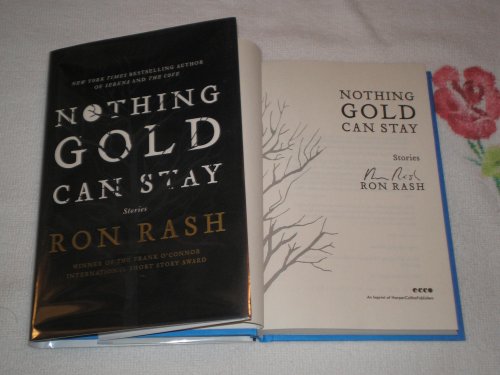
From Ron Rash, PEN / Faulkner Award finalist and New York Times bestselling author of Serena, comes a new collection of unforgettable stories set in Appalachia that focuses on the lives of those haunted by violence and tenderness, hope and fear—spanning the Civil War to the present day.
The darkness of Ron Rash’s work contrasts with its unexpected sensitivity and stark beauty in a manner that could only be accomplished by this master of the short story form.
Nothing Gold Can Stay includes 14 stories, including Rash’s “The Trusty,” which first appeared in The New Yorker.
"synopsis" may belong to another edition of this title.
From the Back Cover
PEN/Faulkner Award finalist and New York Times bestselling author Ron Rash turns again to Appalachia to capture lives haunted by violence and tenderness, hope and fear, in unforgettable stories that span from the Civil War to the present day.
In the title story, two drug-addicted friends return to the farm where they worked as boys to steal their former boss's gruesomely unusual war trophies. In "The Trusty," which first appeared in The New Yorker, a prisoner sent to fetch water for his chain gang tries to sweet-talk a farmer's young wife into helping him escape, only to find that she is as trapped as he is. In "Something Rich and Strange," a diver is called upon to pull a drowned girl's body free from under a falls, but he finds her eerily at peace below the surface. The violence of Rash's characters and their raw settings are matched only by their resonance and stark beauty, a masterful combination that has earned Rash an avalanche of praise.
Excerpt. © Reprinted by permission. All rights reserved.
Nothing Gold Can Stay
By Ron RashHarperCollins Publishers
Copyright ©2013 Ron Rash
All rights reserved.
ISBN: 978-0-06-220271-0All rights reserved.
Excerpt
CHAPTER 1
The Trusty
They had been moving up the road a week withoutseeing another farmhouse, and the nearest well,at least the nearest the owner would let Sinkleruse, was half a mile back. What had been a trusty sluff jobwas now as onerous as swinging a Kaiser blade or shovelingout ditches. As soon as he'd hauled the buckets back tothe cage truck it was time to go again. He asked Vickeryif someone could spell him and the bull guard smiled andsaid that Sinkler could always strap on a pair of leg ironsand grab a handle. "Bolick just killed a rattlesnake in themweeds yonder," the bull guard said. "I bet he'd square atrade with you." When Sinkler asked if come morning hecould walk ahead to search for another well, Vickery's lipstightened, but he nodded.
The next day, Sinkler took the metal buckets and walkeduntil he found a farmhouse. It was no closer than the other,even a bit farther, but worth padding the hoof a few extrasteps. The well he'd been using belonged to a hunchbackedwidow. The woman who appeared in this doorway wore herhair in a similar tight bun and draped herself in the samesort of flour-cloth dress, but she looked to be in hermid-twenties, like Sinkler. Two weeks would pass before theygot beyond this farmhouse, perhaps another two weeksbefore the next well. Plenty of time to quench a different kindof thirst. As he entered the yard, the woman looked past thebarn to a field where a man and his draft horse were plowing.The woman gave a brisk whistle and the farmer pausedand looked their way. Sinkler stopped beside the well butdid not set the buckets down.
"What you want," the woman said, not so much a questionas a demand.
"Water," Sinkler answered. "We've got a chain gangworking on the road."
"I'd have reckoned you to bring water with you.""Not enough for ten men all day."
The woman looked out at the field again. Her husbandwatched but did not unloop the rein from around his neck.The woman stepped onto the six nailed together planks thatlooked more like a raft than a porch. Firewood was stackedon one side, and closer to the door an axe leaned betweena shovel and a hoe. She let her eyes settle on the axe longenough to make sure he noticed it. Sinkler saw now thatshe was younger than he'd thought, maybe eighteen, at mosttwenty, more girl than woman.
"How come you not to have chains on you?"
"I'm a trusty," Sinkler said, smiling. "A prisoner, but onethat can be trusted."
"And all you want is water?"
Sinkler thought of several possible answers.
"That's what they sent me for."
"I don't reckon there to be any money in it for us?" thegirl asked.
"No, just gratitude from a bunch of thirsty men, andespecially me for not having to haul it so far."
"I'll have to ask my man," she said. "Stay here in theyard."
For a moment he thought she might take the axe withher. As she walked into the field, Sinkler studied the house,which was no bigger than a fishing shack. The dwellingappeared to have been built in the previous century. The dooropened with a latch, not a knob, and no glass filled the windowframes. Sinkler stepped closer to the entrance and sawtwo ladder back chairs and a small table set on a puncheonfloor. Sinkler wondered if these apple-knockers had heardthey were supposed to be getting a new deal.
"You can use the well," the girl said when she returned,"but he said you need to forget one of them pails here nexttime you come asking for water."
Worth it, he figured, even if Vickery took the money outof Sinkler's own pocket, especially with no sign up aheadof another farmhouse. It would be a half-dollar at most,easily made up with one slick deal in a poker game. Henodded and went to the well, sent the rusty bucket downinto the dark. The girl went up on the porch but didn't goinside.
"What you in prison for?"
"Thinking a bank manager wouldn't notice his tellerslipping a few bills in his pocket."
"Whereabouts?"
"Raleigh."
"I ain't never been past Asheville," the girl said. "Howlong you in for?"
"Five years. I've done sixteen months."
Sinkler raised the bucket, water leaking from the bottomas he transferred its contents. The girl stayed on theporch, making sure that all he took was water.
"You lived here long?"
"Me and Chet been here a year," the girl said. "I grew upacross the ridge yonder."
"You two live alone, do you?"
"We do," the girl said, "but there's a rifle just inside thedoor and I know how to bead it."
"I'm sure you do," Sinkler said. "You mind telling meyour name, just so I'll know what to call you?"
"Lucy Sorrels."
He waited to see if she'd ask his.
"Mine's Sinkler," he said when she didn't.
He filled the second bucket but made no move to leave,instead looking around at the trees and mountains as if justnoticing them. Then he smiled and gave a slight nod."Must get lonely being out so far from everything,"
Sinkler said. "At least, I would think so."
"And I'd think them men to be getting thirsty," LucySorrels said.
"Probably," he agreed, surprised at her smarts in turninghis words back on him. "But I'll return soon to brighten yourday."
"When you planning to leave one of them pails?" sheasked.
"Last trip before quitting time."
She nodded and went into the shack.
"The rope broke," he told Vickery as the prisoners piled intothe truck at quitting time.
The guard looked not so much skeptical as aggrievedthat Sinkler thought him fool enough to believe it. Vickeryanswered that if Sinkler thought he'd lightened his load hewas mistaken. It'd be easy enough to find another bucket,maybe one that could hold an extra gallon. Sinkler shruggedand lifted himself into the cage truck, found a place on themetal bench among the sweating convicts. He'd won overthe other guards with cigarettes and small loans, that andhis mush talk, but not Vickery, who'd argued that makingSinkler a trusty would only give him a head start when hetried to escape.
The bull guard was right about that. Sinkler had morethan fifty dollars in poker winnings now, plenty enoughcash to get him across the Mississippi and finally shedhimself of the whole damn region. He'd grown up inMontgomery, but when the law got too interested in hiscomings and goings he'd gone north to Knoxville and thenwest to Memphis before recrossing Tennessee on his wayto Raleigh. Sinkler's talents had led him to establishmentswhere his sleight of hand needed no deck of cards. With adecent suit, clean fingernails, and buffed shoes, he'd walkinto a business and be greeted as a solid citizen. Tell a storyabout being in town because of an ailing mother and youwere the cat's pajamas. They'd take the Help Wanted signout of the window and pretty much replace it with HelpYourself. Sinkler remembered the afternoon in Memphiswhen he had stood by the river after grifting a clothingstore of forty dollars in two months. Keep heading west orturn back east— that was the choice. He'd flipped a silverdollar to decide, a rare moment when he'd trusted his lifepurely to luck.
This time he'd cross the river, start in Kansas City orSt. Louis. He'd work the stores and cafés and newsstandsand anywhere else with a till or a cash register. Except for abank. Crooked as bankers were, Sinkler should have realizedhow quickly they'd recognize him as one of their own.No, he'd not make that mistake again.
That night, when the stockade lights were snuffed, helay in his bunk and thought about Lucy Sorrels. A yearand a half had passed since he'd been with a woman. Afterthat long, almost any female would make the sap rise.There was nothing about her face to hold a man's attention,but curves tightened the right parts of her dress.
Nice legs too. Each trip to the well that day, he had triedto make small talk. She had given him the icy mitts, buthe had weeks yet to warm her up. It was only on the lasthaul that the husband had come in from his field. He'dbarely responded to Sinkler's "how do you do's" and "muchobliged's." He looked to be around forty and Sinklersuspected that part of his terseness was due to a younger manbeing around his wife. After a few moments, the farmerhad nodded at the pail in Sinkler's left hand. "You'll beleaving that, right?" When Sinkler said yes, the husbandtold Lucy to switch it with the leaky well bucket, thenwalked into the barn.
Two days passed before Lucy asked if he'd ever thoughtof trying to escape.
"Of course," Sinkler answered. "Have you?"
She looked at him in a way that he could not read.
"How come you ain't done it, then? They let you roamnear anywhere you want, and you ain't got shackles."
"Maybe I enjoy the free room and board," Sinkler answered.He turned a thumb toward his stripes. "Nice dudstoo. They even let you change them out every Sunday.""I don't think I could stand it," Lucy said. "Being lockedup so long and knowing I still had nigh on four years."He checked her lips for the slightest upward curve of asmile, but it wasn't there.
"Yeah," Sinkler said, taking a step closer. "You don'tseem the sort to stand being locked up. I'd think a younggal pretty as you would want to see more of the world.""How come you ain't done it?" she asked again, andbrushed some loose wisps of hair behind her ear.
"Maybe the same reason as you," Sinkler said. "It's notlike you can get whisked away from here. I haven't seenmore than a couple of cars and trucks on this road, andthose driving them know there's prisoners about. Theywouldn't be fool enough to pick up a stranger. Haven't seena lot of train tracks either."
"Anybody ever try?" Lucy asked.
"Yeah, two weeks ago. Fellow ran that morning and thebloodhounds had him grabbing sky by dark. All he got forhis trouble was a bunch of tick bites and briar scratches.That and another year added to his sentence."
For the first time since she'd gone to fetch her husband,Lucy stepped off the porch and put some distance betweenher and the door. The rifle and axe too, which meant thatshe was starting to trust him at least a little. She stood inthe yard and looked up at an eave, where black insectshovered around clots of dried mud.
"Them dirt daubers is a nuisance," Lucy said. "I knocktheir nests down and they build them back the next day.""I'd guess them to be about the only thing that wants tostay around here, don't you think?"
"You've got a saucy way of talking," she said.
"You don't seem to mind it too much," Sinkler answered,and nodded toward the field. "An older fellow likethat usually keeps a close eye on a pretty young wife, buthe must be the trusting sort, or is it he just figures he's gotyou corralled in?"
He lifted the full buckets and stepped close enough tothe barn not to be seen from the field. "You don't have tostand so far from me, Lucy Sorrels. I don't bite."
She didn't move toward him but she didn't go back to theporch, either.
"If you was to escape, where would you go?"
"Might depend on who was going with me," Sinkleranswered. "What kind of place would you like to visit?""Like you'd just up and take me along. I'd likely thatabout as much as them daubers flying me out of here."
"No, I'd need to get to know my traveling partner better,"Sinkler said. "Make sure she really cared about me.That way she wouldn't take a notion to turn me in."
"You mean for the reward money?"
Sinkler laughed.
"You've got to be a high cloud to have a reward put onyou, darling. They'd not even bother to put my mug in apost office, which is fine by me. Buy my train ticket and I'dbe across the Mississippi in two days. Matter of fact, I've gotmoney enough saved to buy two tickets."
"Enough for two tickets?" she asked.
"I do indeed."
Lucy looked at her bare feet, placed one atop the otheras a shy child might. She set both feet back on the groundand looked up.
"Why come you to think a person would turn you in ifthere ain't no reward?"
"Bad conscience— which is why I've got to be sure mycompanion doesn't have one." Sinkler smiled. "Like I said,you don't have to stand so far away. We could even step intothe barn for a few minutes."
Lucy looked toward the field and let her gaze linger longenough that he thought she just might do it.
"I have chores to get done," she said and went into theshack.
Sinkler headed back down the road, thinking thingsout. By the time he set the sloshing buckets beside theprison truck, he'd figured a way to get Lucy Sorrels's dressraised with more than just sweet talk. He'd tell her therewas an extra set of truck keys in a guard's front desk hecould steal. Once the guards were distracted, he'd jumpin the truck, pick her up, head straight to Asheville, andcatch the first train out. It was a damn good story, one - Sinklerhimself might have believed if he didn't knowthat all the extra truck keys were locked inside a thousandpound Mosler safe.
(Continues...)
Excerpted from Nothing Gold Can Stay by Ron Rash. Copyright © 2013 by Ron Rash. Excerpted by permission of HarperCollins Publishers.
All rights reserved. No part of this excerpt may be reproduced or reprinted without permission in writing from the publisher.
Excerpts are provided by Dial-A-Book Inc. solely for the personal use of visitors to this web site.
"About this title" may belong to another edition of this title.
Search results for Nothing Gold Can Stay: Stories

Stock Image
Nothing Gold Can Stay: Stories
Published by
HarperCollins Publishers Inc, 2013
ISBN 10: 0062202715
ISBN 13: 9780062202710
Used
Hardcover
Seller: World of Books (was SecondSale), Montgomery, IL, U.S.A.
Seller rating 5 out of 5 stars

Hardback. Condition: Good. From Ron Rash, PEN / Faulkner Award finalist and New York Times bestselling author of Serena, comes a new collection of unforgettable stories set in Appalachia that focuses on the lives of those haunted by violence and tenderness, hope and fear--spanning the Civil War to the present day. The darkness of Ron Rash's work contrasts with its unexpected sensitivity and stark beauty in a manner that could only be accomplished by this master of the short story form. Nothing Gold Can Stay includes 14 stories, including Rash's "The Trusty," which first appeared in The New Yorker. Seller Inventory # 00106434707
Stock Image
Nothing Gold Can Stay: Stories
Published by
HarperCollins Publishers Inc, 2013
ISBN 10: 0062202715
ISBN 13: 9780062202710
Used
Hardcover
Seller: World of Books (was SecondSale), Montgomery, IL, U.S.A.
Seller rating 5 out of 5 stars
Hardback. Condition: Fair. From Ron Rash, PEN / Faulkner Award finalist and New York Times bestselling author of Serena, comes a new collection of unforgettable stories set in Appalachia that focuses on the lives of those haunted by violence and tenderness, hope and fear--spanning the Civil War to the present day. The darkness of Ron Rash's work contrasts with its unexpected sensitivity and stark beauty in a manner that could only be accomplished by this master of the short story form. Nothing Gold Can Stay includes 14 stories, including Rash's "The Trusty," which first appeared in The New Yorker. Seller Inventory # 00081014442
Seller Image
Nothing Gold Can Stay: Stories
Seller: Greenworld Books, Arlington, TX, U.S.A.
Seller rating 5 out of 5 stars
Condition: very_good. Fast Free Shipping â" Very Good condition book with a firm cover and clean pages. Shows normal use and some light wear or limited notes markings. A solid, nice copy to enjoy. Seller Inventory # GWV.0062202715.VG
Seller Image
Nothing Gold Can Stay: Stories
Seller: ZBK Books, Carlstadt, NJ, U.S.A.
Seller rating 5 out of 5 stars
Condition: like_new. Fast & Free Shipping â" Excellent condition book with clean cover and pages. Barely handled, with minimal wear. An outstanding copy, close to enjoy! Seller Inventory # ZWV.0062202715.LN
Stock Image
Nothing Gold Can Stay: Stories
Published by
Ecco (edition First Edition), 2013
ISBN 10: 0062202715
ISBN 13: 9780062202710
Used
Hardcover
First Edition
Seller: BooksRun, Philadelphia, PA, U.S.A.
Seller rating 5 out of 5 stars
Hardcover. Condition: Fair. First Edition. With dust jacket. The item might be beaten up but readable. May contain markings or highlighting, as well as stains, bent corners, or any other major defect, but the text is not obscured in any way. Seller Inventory # 0062202715-7-1-29
Stock Image
Nothing Gold Can Stay : Stories
Published by
HarperCollins Publishers, 2013
ISBN 10: 0062202715
ISBN 13: 9780062202710
Used
Hardcover
First Edition
Seller: Better World Books, Mishawaka, IN, U.S.A.
Seller rating 5 out of 5 stars
Condition: Very Good. First Edition. Pages intact with possible writing/highlighting. Binding strong with minor wear. Dust jackets/supplements may not be included. Stock photo provided. Product includes identifying sticker. Better World Books: Buy Books. Do Good. Seller Inventory # 5241335-6
Stock Image
Nothing Gold Can Stay : Stories
Published by
HarperCollins Publishers, 2013
ISBN 10: 0062202715
ISBN 13: 9780062202710
Used
Hardcover
First Edition
Seller: Better World Books, Mishawaka, IN, U.S.A.
Seller rating 5 out of 5 stars
Condition: Good. First Edition. Former library copy. Pages intact with minimal writing/highlighting. The binding may be loose and creased. Dust jackets/supplements are not included. Includes library markings. Stock photo provided. Product includes identifying sticker. Better World Books: Buy Books. Do Good. Seller Inventory # 235296-6
Stock Image
Nothing Gold Can Stay : Stories
Published by
HarperCollins Publishers, 2013
ISBN 10: 0062202715
ISBN 13: 9780062202710
Used
Hardcover
First Edition
Seller: Better World Books, Mishawaka, IN, U.S.A.
Seller rating 5 out of 5 stars
Condition: Very Good. First Edition. Former library copy. Pages intact with possible writing/highlighting. Binding strong with minor wear. Dust jackets/supplements may not be included. Includes library markings. Stock photo provided. Product includes identifying sticker. Better World Books: Buy Books. Do Good. Seller Inventory # 4429288-6
Stock Image
Nothing Gold Can Stay: Stories
Published by
HarperCollins Publishers Inc, 2013
ISBN 10: 0062202715
ISBN 13: 9780062202710
Used
Hardcover
Seller: World of Books Inc, Montgomery, IL, U.S.A.
Seller rating 4 out of 5 stars

Hardback. Condition: Fair. From Ron Rash, PEN / Faulkner Award finalist and New York Times bestselling author of Serena, comes a new collection of unforgettable stories set in Appalachia that focuses on the lives of those haunted by violence and tenderness, hope and fear--spanning the Civil War to the present day. The darkness of Ron Rash's work contrasts with its unexpected sensitivity and stark beauty in a manner that could only be accomplished by this master of the short story form. Nothing Gold Can Stay includes 14 stories, including Rash's "The Trusty," which first appeared in The New Yorker. Seller Inventory # CIN0062202715A
Stock Image
Nothing Gold Can Stay: Stories
Seller: Wonder Book, Frederick, MD, U.S.A.
Seller rating 5 out of 5 stars
Condition: As New. Signed Copy . Like New dust jacket. Inscribed by author on title page. Seller Inventory # J00C-03300