
Prisons We Choose To Live Inside: A Nobel Prize-Winning Non-Fiction Study of Political Despotism and Ignorance - Softcover
Book 4 of 4: Cornelia & Michael Bessie Books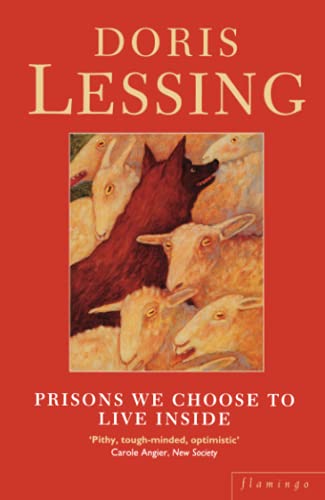
Synopsis
A Nobel Prize-Winning Non-Fiction Study of Political Despotism and Ignorance
"synopsis" may belong to another edition of this title.
About the Author
Doris Lessing was one of the most important writers of the second half of the 20th-century and was awarded the Nobel Prize for Literature 2007. Her novels include The Grass is Singing, The Golden Notebook and The Good Terrorist. In 2001, Lessing was awarded the David Cohen Prize for a lifetime's achievement in British literature. In 2008, The Times ranked her fifth on a list of "The 50 greatest British writers since 1945". She died in 2013.
From the Back Cover
'Prisons We Choose to Live Inside' is a collection of six remarkable lectures in which Doris Lessing explores the thesis that we are ‘dominated by our savage past, as individuals and as groups.’ Drawing liberally from history, politics and literature, she demonstrates how this ‘innate primitivism’ has manifested itself throughout the ages, as war fever, mindless brutality, racism, and religious and political fervour – all fuelled by rhetoric and the language of ideology. Despite the extraordinary advances made in the social sciences, thus equipping us more than ever before with the means to analyse, predict and defuse our self-destructive behaviour, we are still unable to control our barbaric instincts and escape from the prison of our human nature.
An incisive and passionately-argued polemic, highlighting many of the themes at work in Doris Lessing’s novels, 'Prisons We Choose to Live Inside' is both a superb introduction to the thought of one on this century’s most influential writers and a brilliant dissection of the irrationalities and foibles of mankind.
‘I think when people look back at our time, they will be annoyed at one thing more than any other. It is this – that we do know more about ourselves now than people did in the past, but that very little of this knowledge has been put into effect… people to come will marvel at it, as we marvel at the blindness an inflexibility of our ancestors.’
DORIS LESSING, from 'When in the Future They Look Back on Us'
‘A major figure in twentieth-century literature, Doris Lessing’s labours and prodigious output have helped to change the way we see ourselves.’
MICHÈLE ROBERTS, 'New Statesman'
"About this title" may belong to another edition of this title.
Other Popular Editions of the Same Title

Search results for Prisons We Choose To Live Inside: A Nobel Prize-Winning...

Stock Image
Prisons We Choose To Live Inside
Seller: AwesomeBooks, Wallingford, United Kingdom
Seller rating 5 out of 5 stars

Paperback. Condition: Very Good. Prisons We Choose To Live Inside This book is in very good condition and will be shipped within 24 hours of ordering. The cover may have some limited signs of wear but the pages are clean, intact and the spine remains undamaged. This book has clearly been well maintained and looked after thus far. Money back guarantee if you are not satisfied. See all our books here, order more than 1 book and get discounted shipping. Seller Inventory # 7719-9780006546283
Buy Used
£ 5.27
£ 4.12 shipping
Ships from United Kingdom to U.S.A.
Ships from United Kingdom to U.S.A.
Quantity: 2 available
Stock Image
Prisons We Choose To Live Inside
Seller: Bahamut Media, Reading, United Kingdom
Seller rating 5 out of 5 stars
Paperback. Condition: Very Good. This book is in very good condition and will be shipped within 24 hours of ordering. The cover may have some limited signs of wear but the pages are clean, intact and the spine remains undamaged. This book has clearly been well maintained and looked after thus far. Money back guarantee if you are not satisfied. See all our books here, order more than 1 book and get discounted shipping. Seller Inventory # 6545-9780006546283
Buy Used
£ 5.46
£ 6.98 shipping
Ships from United Kingdom to U.S.A.
Ships from United Kingdom to U.S.A.
Quantity: 2 available
Stock Image
Prisons We Choose to Live Inside
Seller: Ria Christie Collections, Uxbridge, United Kingdom
Seller rating 5 out of 5 stars
Condition: New. In English. Seller Inventory # ria9780006546283_new
Buy New
£ 10.94
£ 11.98 shipping
Ships from United Kingdom to U.S.A.
Ships from United Kingdom to U.S.A.
Quantity: Over 20 available
Stock Image
Prisons We Choose to Live Inside
Print on DemandSeller: Revaluation Books, Exeter, United Kingdom
Seller rating 5 out of 5 stars
Paperback. Condition: Brand New. 114 pages. 7.64x4.96x0.39 inches. This item is printed on demand. Seller Inventory # zk0006546285
Buy New
£ 13.11
£ 10 shipping
Ships from United Kingdom to U.S.A.
Ships from United Kingdom to U.S.A.
Quantity: 1 available
Seller Image
Prisons We Choose to Live Inside
Published by
HarperCollins Publishers, GB, 1994
ISBN 10: 0006546285
ISBN 13: 9780006546283
New
Paperback
Seller: Rarewaves.com USA, London, LONDO, United Kingdom
Seller rating 5 out of 5 stars
Paperback. Condition: New. The companion to a series of lectures given by Lessing, winner of the Nobel Prize for Literature, in which she addresses some of the most important questions facing us today. 'This is a time when it is frightening to be alive, when it is hard to think of human beings as rational creatures. Everywhere we look we see brutality, stupidity, until it seems that there is nothing else to be seen but that - a descent into barbarism, everywhere, which we are unable to check. But I think that while it is true there is a general worsening, it is precisely because things are so frightening we become hypnotized, and do not notice - or if we notice, belittle - equally strong forces on the other side, the forces, in short, of reason, sanity and civilization .' In this published version of a series of perceptive and thought-provoking lectures, Lessing stresses the importance of independent thought, of questioning received opinion and fighting the lure of apathy. She argues that only if we are free to interrogate authority and disagree that despotism and ignorance can be defeated. We must examine 'ideas, from whatever source they come, to see how they may usefully contribute to our lives and to the societies we live in'. Seller Inventory # LU-9780006546283
Buy New
£ 23.95
Free Shipping
Ships from United Kingdom to U.S.A.
Ships from United Kingdom to U.S.A.
Quantity: Over 20 available
Stock Image
Prisons We Choose to Live Inside
Seller: Greener Books, London, United Kingdom
Seller rating 4 out of 5 stars

Paperback. Condition: Used; Good. **SHIPPED FROM UK** We believe you will be completely satisfied with our quick and reliable service. All orders are dispatched as swiftly as possible! Buy with confidence! Greener Books. Seller Inventory # 1460691
Buy Used
£ 6.29
£ 20 shipping
Ships from United Kingdom to U.S.A.
Ships from United Kingdom to U.S.A.
Quantity: 1 available
Stock Image
Prisons We Choose to Live Inside (Paperback)
Published by
HarperCollins Publishers, London, 1994
ISBN 10: 0006546285
ISBN 13: 9780006546283
New
Paperback
Seller: CitiRetail, Stevenage, United Kingdom
Seller rating 5 out of 5 stars
Paperback. Condition: new. Paperback. The companion to a series of lectures given by Lessing, winner of the Nobel Prize for Literature, in which she addresses some of the most important questions facing us today. This is a time when it is frightening to be alive, when it is hard to think of human beings as rational creatures. Everywhere we look we see brutality, stupidity, until it seems that there is nothing else to be seen but that a descent into barbarism, everywhere, which we are unable to check. But I think that while it is true there is a general worsening, it is precisely because things are so frightening we become hypnotized, and do not notice or if we notice, belittle equally strong forces on the other side, the forces, in short, of reason, sanity and civilization In this published version of a series of perceptive and thought-provoking lectures, Lessing stresses the importance of independent thought, of questioning received opinion and fighting the lure of apathy. She argues that only if we are free to interrogate authority and disagree that despotism and ignorance can be defeated. We must examine 'ideas, from whatever source they come, to see how they may usefully contribute to our lives and to the societies we live in. The companion to a series of lectures given by Lessing, winner of the Nobel Prize for Literature, in which she addresses some of the most important questions facing us today. This item is printed on demand. Shipping may be from our UK warehouse or from our Australian or US warehouses, depending on stock availability. Seller Inventory # 9780006546283
Buy New
£ 14.99
£ 37 shipping
Ships from United Kingdom to U.S.A.
Ships from United Kingdom to U.S.A.
Quantity: 1 available
Seller Image
Lessing, D: Prisons We Choose to Live Inside
Seller: moluna, Greven, Germany
Seller rating 5 out of 5 stars
Condition: New. Seller Inventory # 594319837
Buy New
£ 16.59
£ 41.80 shipping
Ships from Germany to U.S.A.
Ships from Germany to U.S.A.
Quantity: Over 20 available
Seller Image
Prisons We Choose to Live Inside
Published by
Harpercollins Mai 1994, 1994
ISBN 10: 0006546285
ISBN 13: 9780006546283
New
Taschenbuch
Seller: AHA-BUCH GmbH, Einbeck, Germany
Seller rating 5 out of 5 stars
Taschenbuch. Condition: Neu. Neuware - The companion to a series of lectures given by Lessing, winner of the Nobel Prize for Literature, in which she addresses some of the most important questions facing us today.'This is a time when it is frightening to be alive, when it is hard to think of human beings as rational creatures. Everywhere we look we see brutality, stupidity, until it seems that there is nothing else to be seen but that - a descent into barbarism, everywhere, which we are unable to check. But I think that while it is true there is a general worsening, it is precisely because things are so frightening we become hypnotized, and do not notice - or if we notice, belittle - equally strong forces on the other side, the forces, in short, of reason, sanity and civilization .'In this published version of a series of perceptive and thought-provoking lectures, Lessing stresses the importance of independent thought, of questioning received opinion and fighting the lure of apathy. She argues that only if we are free to interrogate authority and disagree that despotism and ignorance can be defeated. We must examine 'ideas, from whatever source they come, to see how they may usefully contribute to our lives and to the societies we live in'. Seller Inventory # 9780006546283
Seller Image
Prisons We Choose to Live Inside
Published by
HarperCollins Publishers, GB, 1994
ISBN 10: 0006546285
ISBN 13: 9780006546283
New
Paperback
Seller: Rarewaves.com UK, London, United Kingdom
Seller rating 5 out of 5 stars
Paperback. Condition: New. The companion to a series of lectures given by Lessing, winner of the Nobel Prize for Literature, in which she addresses some of the most important questions facing us today. 'This is a time when it is frightening to be alive, when it is hard to think of human beings as rational creatures. Everywhere we look we see brutality, stupidity, until it seems that there is nothing else to be seen but that - a descent into barbarism, everywhere, which we are unable to check. But I think that while it is true there is a general worsening, it is precisely because things are so frightening we become hypnotized, and do not notice - or if we notice, belittle - equally strong forces on the other side, the forces, in short, of reason, sanity and civilization .' In this published version of a series of perceptive and thought-provoking lectures, Lessing stresses the importance of independent thought, of questioning received opinion and fighting the lure of apathy. She argues that only if we are free to interrogate authority and disagree that despotism and ignorance can be defeated. We must examine 'ideas, from whatever source they come, to see how they may usefully contribute to our lives and to the societies we live in'. Seller Inventory # LU-9780006546283
Buy New
£ 10.93
£ 65 shipping
Ships from United Kingdom to U.S.A.
Ships from United Kingdom to U.S.A.
Quantity: Over 20 available