Synopsis
A sweeping, beautifully written history of artistic patronage from 1000 to the present day by a Wolfson Prize-winning historian.
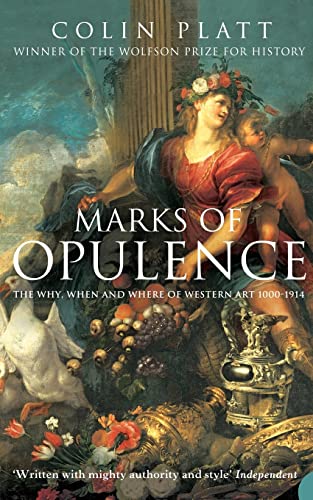
‘Marks of Opulence’ is a magisterial survey of European art and artistic patronage from 1000 until the birth of modernism. Tracing the history from the discovery of silver in the Harz mountains, through the catastrophic effects of plague in the 14th-century, to the studied magnificence of papal and royal courts in the 16th- and 17th-centuries, Platt shows how the great and the good have always used art to bolster political power.
Arguing that the acquisitive instinct – felt by all of us in different ways – is central to the history of Western art, Platt traces how art began to move out of the palaces of the aristocracy into the homes of merchants, bankers and industrialists. From the mid 19th-century onwards, and in the pre-war Belle Époque in particular, it was the immensely wealthy 'robber barons' and their widows – in London and Paris, in Berlin and Vienna, in Moscow and Barcelona, in Philadelphia and New York – who collected the work of the most innovative artists and broke the hold of the Academies on Western art.
Professor Platt's ambitious sweep through a thousand years of artistic endeavour in the West argues throughout that a superfluity of money is the chief driver of high achievement in the arts, and for the transforming power of great riches.
"synopsis" may belong to another edition of this title.
About the Author
Colin Platt is Professor of Art History at Southampton University. He is the author of many books including King Death : A History of the Plague, The Architecture of Medieval Britain, which was awarded the Wolfson Prize for History, and the classic The Medieval Town. He lives in Devon.
"About this title" may belong to another edition of this title.
Other Popular Editions of the Same Title

Search results for MARKS OF OPULENCE: The Why, When and Where of Western...

Stock Image
Marks of Opulence: The Why, When and Where of Western Art 1000-1914
Seller: ThriftBooks-Atlanta, AUSTELL, GA, U.S.A.
Seller rating 5 out of 5 stars

Paperback. Condition: Very Good. No Jacket. May have limited writing in cover pages. Pages are unmarked. ~ ThriftBooks: Read More, Spend Less. Seller Inventory # G0006531563I4N00
Stock Image
Marks of Opulence: The Why, When and Where of Western Art 1000â"1914
Seller: HPB Inc., Dallas, TX, U.S.A.
Seller rating 5 out of 5 stars
paperback. Condition: Very Good. Connecting readers with great books since 1972! Used books may not include companion materials, and may have some shelf wear or limited writing. We ship orders daily and Customer Service is our top priority! Seller Inventory # S_451804980
Stock Image
Marks of Opulence: The Why, When and Where of Western Art 1000-1914
Seller: Reuseabook, Gloucester, GLOS, United Kingdom
Seller rating 5 out of 5 stars
Paperback. Condition: Used; Good. Dispatched, from the UK, within 48 hours of ordering. This book is in good condition but will show signs of previous ownership. Please expect some creasing to the spine and/or minor damage to the cover. Aged book. Tanned pages and age spots, however, this will not interfere with reading. Seller Inventory # CHL10445842
Stock Image
Marks of Opulence: The Why, When and Where of Western Art 1000-1914
Published by
HarperCollins Publishers Limited, 2005
ISBN 10: 0006531563
ISBN 13: 9780006531562
Used
Softcover
Seller: Powell's Bookstores Chicago, ABAA, Chicago, IL, U.S.A.
Seller rating 5 out of 5 stars
Condition: Used - Very Good. 2006. Paperback. Pap. Minor shelf-wear. Very Good. Seller Inventory # SOL10462
Seller Image
Marks of Opulence : The Why, When And Where of Western Art 1000-1900 Ad
Seller: GreatBookPrices, Columbia, MD, U.S.A.
Seller rating 5 out of 5 stars
Condition: New. Seller Inventory # 3169442-n
Seller Image
Marks of Opulence (Paperback or Softback)
Published by
Harper Perennial 1/17/2005, 2005
ISBN 10: 0006531563
ISBN 13: 9780006531562
New
Paperback or Softback
Seller: BargainBookStores, Grand Rapids, MI, U.S.A.
Seller rating 5 out of 5 stars
Paperback or Softback. Condition: New. Marks of Opulence. Book. Seller Inventory # BBS-9780006531562
Seller Image
Marks of Opulence : The Why, When And Where of Western Art 1000-1900 Ad
Seller: GreatBookPrices, Columbia, MD, U.S.A.
Seller rating 5 out of 5 stars
Condition: As New. Unread book in perfect condition. Seller Inventory # 3169442
Stock Image
Marks of Opulence: The Why, When and Where of Western Art 1000-1914
Seller: Lucky's Textbooks, Dallas, TX, U.S.A.
Seller rating 5 out of 5 stars
Condition: New. Seller Inventory # ABLIING23Feb2215580000044
Stock Image
Marks of Opulence: The Why, When and Where of Western Art 1000-1914
Seller: California Books, Miami, FL, U.S.A.
Seller rating 5 out of 5 stars
Condition: New. Seller Inventory # I-9780006531562
Seller Image
Marks of Opulence
Published by
HarperCollins Publishers, GB, 2005
ISBN 10: 0006531563
ISBN 13: 9780006531562
New
Paperback
Seller: Rarewaves USA, OSWEGO, IL, U.S.A.
Seller rating 5 out of 5 stars
Paperback. Condition: New. A sweeping, beautifully written history of artistic patronage from 1000 to the present day by a Wolfson Prize-winning historian. 'Marks of Opulence' is a magisterial survey of European art and artistic patronage from 1000 until the birth of modernism. Tracing the history from the discovery of silver in the Harz mountains, through the catastrophic effects of plague in the 14th-century, to the studied magnificence of papal and royal courts in the 16th- and 17th-centuries, Platt shows how the great and the good have always used art to bolster political power. Arguing that the acquisitive instinct - felt by all of us in different ways - is central to the history of Western art, Platt traces how art began to move out of the palaces of the aristocracy into the homes of merchants, bankers and industrialists. From the mid 19th-century onwards, and in the pre-war Belle Époque in particular, it was the immensely wealthy 'robber barons' and their widows - in London and Paris, in Berlin and Vienna, in Moscow and Barcelona, in Philadelphia and New York - who collected the work of the most innovative artists and broke the hold of the Academies on Western art. Professor Platt's ambitious sweep through a thousand years of artistic endeavour in the West argues throughout that a superfluity of money is the chief driver of high achievement in the arts, and for the transforming power of great riches. Seller Inventory # LU-9780006531562