
Items related to Masterworks of Technology: The Story of Creative Engineering...
Synopsis
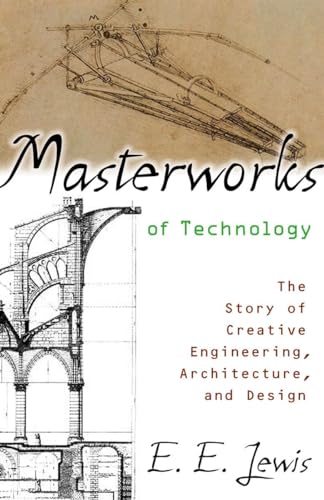
In this absorbing exploration of technological creativity throughout the ages, E. E. Lewis, professor of mechanical engineering at Northwestern University, eloquently tells the story of how science and engineering which had little in common until a few hundred years ago came together to create the technological world of the 21st century.
Today s technology is the product of a fascinating synergy of science s search for comprehension of the material universe and engineering s drive to build things and make them work. In the 20th century this synergy achieved many unprecedented successes, the most spectacular of which is arguably the first moon landing of the Apollo program. "Rocket science," now symbolic of humanity s most complex technological endeavors, is the culmination of centuries of achievements by architects of pyramids and cathedrals, medieval craft guilds, and pioneering inventors and scientists from the Renaissance through the Industrial Revolution.
Melding his own personal experiences from visiting Chartres Cathedral to flying aboard a Boeing 777 with vivid historical vignettes, the author skillfully demonstrates the importance of craft tradition, scientific method, production organization, economics, and more to the creation of modern technology. The many topics that Lewis illuminates include the slow evolution of the wheelwright s craft, the background and training of the architect-engineers who undertook the construction of medieval cathedrals, the importance of patronage and venture capitalists in realizing the big ideas of past and present, the increasing use of visualization as seen in Leonardo s notebooks, Galileo s immense contribution of bringing science and engineering together, the increasing importance of basic science as the seedbed of engineering and design innovations, the challenge of attempting unprecedented feats while minimizing risk as exemplified by space flight, and much more.
Whether Lewis is discussing the distribution of weight along flying buttresses, the challenges faced by Morse in engineering the telegraph, or the Apollo program s monumental team effort, the author s deep knowledge of and enthusiasm for his subject and his gift for engaging, lively prose make for a fascinating exploration of science and engineering through the ages.
"synopsis" may belong to another edition of this title.
About the Author
E. E. Lewis (Evanston, IL), the former chair of the Department of Mechanical Engineering, is professor of mechanical engineering at the McCormick School of Engineering and Applied Science at Northwestern University. He is the author of three engineering textbooks and numerous journal articles.
"About this title" may belong to another edition of this title.
Search results for Masterworks of Technology: The Story of Creative Engineering...

Stock Image
Masterworks of Technology: The Story of Creative Engineering, Architecture, and Design
Seller: World of Books (was SecondSale), Montgomery, IL, U.S.A.
Seller rating 5 out of 5 stars

Condition: Good. Good condition ex-library book with usual library markings and stickers. Seller Inventory # 00110081405
Stock Image
Masterworks of Technology: The Story of Creative Engineering, Architecture, and Design
Seller: World of Books (was SecondSale), Montgomery, IL, U.S.A.
Seller rating 5 out of 5 stars
Condition: Very Good. Item in very good condition! Textbooks may not include supplemental items i.e. CDs, access codes etc. Seller Inventory # 00097649660
Stock Image
Masterworks of Technology : The Story of Creative Engineering, Architecture, and Design
Published by
Prometheus Books, Publishers, 2004
ISBN 10: 1591022436
ISBN 13: 9781591022435
Used
Hardcover
Seller: Better World Books, Mishawaka, IN, U.S.A.
Seller rating 5 out of 5 stars
Condition: Good. Former library copy. Pages intact with minimal writing/highlighting. The binding may be loose and creased. Dust jackets/supplements are not included. Includes library markings. Stock photo provided. Product includes identifying sticker. Better World Books: Buy Books. Do Good. Seller Inventory # GRP77066164
Stock Image
Masterworks of Technology: The Story of Creative Engineering, Architecture, and Design
Seller: Bookmonger.Ltd, HILLSIDE, NJ, U.S.A.
Seller rating 5 out of 5 stars
hardcover. Condition: Very Good. Tear in dust jacket*. Seller Inventory # mon0000723982
Stock Image
Masterworks of Technology: The Story of Creative Engineering, Architecture, and Design
Seller: World of Books Inc, Montgomery, IL, U.S.A.
Seller rating 4 out of 5 stars

Hardback. Condition: Good. In this absorbing exploration of technological creativity throughout the ages, E. E. Lewis, professor of mechanical engineering at Northwestern University, eloquently tells the story of how science and engineering-which had little in common until a few hundred years ago-came together to create the technological world of the 21st century.In vivid historical vignettes, the author skillfully demonstrates the importance of craft tradition, scientific method, production organization, economics, and more to the creation of modern technology. The many topics that Lewis illuminates include the slow evolution of the wheelwright's craft, the background and training of the architect-engineers who undertook the construction of medieval cathedrals, the importance of patronage and venture capitalists in realizing the big ideas of past and present, the increasing use of visualization as seen in Leonardo's notebooks, Galileo's immense contribution of bringing science and engineering together, the increasing importance of basic science as the seedbed of engineering and design innovations, the challenge of attempting unprecedented feats while minimizing risk as exemplified by space flight, and much more.Whether Lewis is discussing the distribution of weight along flying buttresses, the challenges faced by Morse in engineering the telegraph, or the Apollo program's monumental team effort, the author's deep knowledge of and enthusiasm for his subject and his gift for engaging, lively prose make for a fascinating exploration of science and engineering through the ages. Seller Inventory # CIN1591022436G
Stock Image
Masterworks of Technology: The Story of Creative Engineering, Architecture, and Design
Seller: World of Books Inc, Montgomery, IL, U.S.A.
Seller rating 4 out of 5 stars
Hardback. Condition: Very Good. In this absorbing exploration of technological creativity throughout the ages, E. E. Lewis, professor of mechanical engineering at Northwestern University, eloquently tells the story of how science and engineering-which had little in common until a few hundred years ago-came together to create the technological world of the 21st century.In vivid historical vignettes, the author skillfully demonstrates the importance of craft tradition, scientific method, production organization, economics, and more to the creation of modern technology. The many topics that Lewis illuminates include the slow evolution of the wheelwright's craft, the background and training of the architect-engineers who undertook the construction of medieval cathedrals, the importance of patronage and venture capitalists in realizing the big ideas of past and present, the increasing use of visualization as seen in Leonardo's notebooks, Galileo's immense contribution of bringing science and engineering together, the increasing importance of basic science as the seedbed of engineering and design innovations, the challenge of attempting unprecedented feats while minimizing risk as exemplified by space flight, and much more.Whether Lewis is discussing the distribution of weight along flying buttresses, the challenges faced by Morse in engineering the telegraph, or the Apollo program's monumental team effort, the author's deep knowledge of and enthusiasm for his subject and his gift for engaging, lively prose make for a fascinating exploration of science and engineering through the ages. Seller Inventory # CIN1591022436VG
Stock Image
Masterworks of Technology: The Story of Creative Engineering, Architecture, and Design
Seller: HPB-Red, Dallas, TX, U.S.A.
Seller rating 5 out of 5 stars
hardcover. Condition: Good. Connecting readers with great books since 1972! Used textbooks may not include companion materials such as access codes, etc. May have some wear or writing/highlighting. We ship orders daily and Customer Service is our top priority! Seller Inventory # S_454302823
Stock Image
Masterworks of Technology: The Story of Creative Engineering, Architecture, and Design
Seller: ThriftBooks-Dallas, Dallas, TX, U.S.A.
Seller rating 5 out of 5 stars
Hardcover. Condition: Very Good. No Jacket. May have limited writing in cover pages. Pages are unmarked. ~ ThriftBooks: Read More, Spend Less. Seller Inventory # G1591022436I4N00
Stock Image
Masterworks of Technology: The Story of Creative Engineering, Architecture, and Design
Seller: ThriftBooks-Atlanta, AUSTELL, GA, U.S.A.
Seller rating 5 out of 5 stars
Hardcover. Condition: Good. No Jacket. Pages can have notes/highlighting. Spine may show signs of wear. ~ ThriftBooks: Read More, Spend Less. Seller Inventory # G1591022436I3N00
Stock Image
Masterworks of Technology: The Story of Creative Engineering, Architecture, and Design
Seller: WorldofBooks, Goring-By-Sea, WS, United Kingdom
Seller rating 5 out of 5 stars
Hardback. Condition: Very Good. The book has been read, but is in excellent condition. Pages are intact and not marred by notes or highlighting. The spine remains undamaged. Seller Inventory # GOR008284012
Buy Used
£ 2.80
£ 5.60 shipping
Ships from United Kingdom to U.S.A.
Ships from United Kingdom to U.S.A.
Quantity: 1 available