About this Item
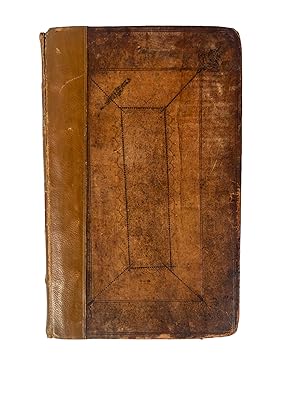
Feltham, Owen. Resolves: Divine, Moral, Political, 1709, presents a mature edition of one of the most widely circulated essay collections of seventeenth-century England, contributing to the development of the English essay as a form of moral and social commentary. First issued in 1623 when Feltham was still a teenager, the work expanded across subsequent editions into a structured series of reflections addressing religious, ethical, and political life within early modern English society. The essays engage questions of conduct, governance, and personal virtue, with particular attention to tensions between private morality and public expectation. Among its most noted passages is the essay "Of Woman," in which Feltham challenges prevailing gender assumptions, writing: "When a woman grows bold and daring, we dislike her, and say, she is too like a man: yet in our selves, we magnify what we condemn. Is not this injustice?" This critique places the work within ongoing debates over gender roles in Renaissance England, often referred to as the "Woman Question," and distinguishes Feltham's voice within a predominantly patriarchal intellectual landscape. Feltham, Owen. Resolves: Divine, Moral Political. London: Benj. Motte for R. Bonwick, W. Freeman et al., 1709. Twelfth edition. Octavo volume, 672 pages, with engraved title page in addition to printed title. Bound in early paneled calf, rebacked in later leather, with bookplate and later ownership inscription on flyleaf. Text includes the expanded series of "resolves," or short essays, organized across divine, ethical, and political themes. Published at a time when essay writing was emerging as a flexible medium for addressing both individual conduct and broader social concerns, this work aligns with the evolution of prose literature in the late seventeenth and early eighteenth centuries. Feltham's integration of moral philosophy with accessible, aphoristic writing contributed to the dissemination of reflective literature beyond strictly scholarly audiences. His engagement with gender, ethics, and civic life situates the volume within early modern debates over authority, virtue, and social order. Wear to binding with chipping at edges and rubbing to spine; staining to upper corners of initial and final leaves; scattered foxing and browning; hinges reinforced; text generally clear; overall very good condition.
Seller Inventory # 20437
Contact seller
Report this item