
Items related to Ray in Reverse
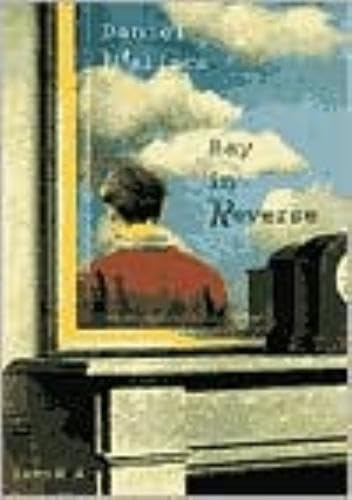
Synopsis
"synopsis" may belong to another edition of this title.
From the Back Cover
Sitting in Last Words group where everyone is recounting their last words on earth, Ray is embarrassed. He didn't declare his love. He didn't say anything symbolic. He didn't reveal his benevolence or goodwill. In fact, he didn't even finish his sentence. His words didn't measure up, and now he can't seem to get them out of his head.
Now, in Heaven, he has time to reflect on his short life of fifty years. This is the darkly humorous story of that life, told backward. We see Ray Williams in his life's most crucial moments--his moments of infidelity, his premature proposal of marriage, his sexual confusion, the dog he accidentally killed, the penny he had to have, and the baby he unwittingly saved. Ray is Everyman at his very best and at his absolute worst--and is none too clear about when he's being either one. Beginning at death and ending at age ten, Wallace's novel leads us back to Ray in his innocence--achieving, against all odds, a happy ending.
Funny, unforgettable, and with one foot in a fabulistic world, Ray in Reverse continues the incandescent storytelling of Big Fish, the storytelling that one reviewer described as "Gabriel Garcia Marquez meets Rowan and Martin."
From the Inside Flap
Sitting in Last Words group where everyone is recounting their last words on earth, Ray is embarrassed. He didn't declare his love. He didn't say anything symbolic. He didn't reveal his benevolence or goodwill. In fact, he didn't even finish his sentence. His words didn't measure up, and now he can't seem to get them out of his head.
Now, in Heaven, he has time to reflect on his short life of fifty years. This is the darkly humorous story of that life, told backward. We see Ray Williams in his life's most crucial moments--his moments of infidelity, his premature proposal of marriage, his sexual confusion, the dog he accidentally killed, the penny he had to have, and the baby he unwittingly saved. Ray is Everyman at his very best and at his absolute worst--and is none too clear about when he's being either one. Beginning at death and ending at age ten, Wallace's novel leads us back to Ray in his innocence--achieving, against all odds, a happy ending.
Funny, unforgettable, and with one foot in a fabulistic world, Ray in Reverse continues the incandescent storytelling of Big Fish, the storytelling that one reviewer described as "Gabriel Garcia Marquez meets Rowan and Martin."
Excerpt. © Reprinted by permission. All rights reserved.
Excerpt
Ray in Heaven
Ray, like the rest of us here, is dead. He sits in a folding metal chair towardthe back of the group, right on the fringe, as though he's unsure of himself, ofwhere he belongs. That's fine, he's new here, and there's always a transitionfrom one world to the next. He doesn't know how lucky he is though! First ofall, he's in Heaven, which clearly makes him at least a little special. Second,he's in Last Words. In Heaven these days Last Words is more popular than ever,so securing a place here in our group has become quite difficult. There's thewaiting list, which is longer than most, and then of course the words themselveshave to be of a certain caliber (there's a screening committee). Still,sometimes strings are pulled, and I wonder if this is what happened with Ray.Certainly that's why Stella Kauffman is here, this slight, pale woman with aneager, ingratiating smile, who joins us today for the first time: it was herancestor Betty Karnovski who started the group an age or two ago, so we had totake her in.
When it's time to begin, Stella raises her hand and Betty?no surprise tome?picks her to start us off.
"I'm from New York City," Stella says, an admission that generates a littletremor through the group: New York City is so poorly represented in Heaven thatsome of us had forgotten it exists. Stella shifts, uncomfortable in the metalchairs provided for our group, and she squints a bit?the overhead fluorescentlights always seem too bright in the beginning?and then she clears her throatand begins.
"Okay. My last words. ?I wonder if I left the oven on.'"
She utters them to us with an operatic undertone in her voice, as though shewere God. Then she settles back, satisfied apparently.
A few of us nod, but none of us dare look Stella's way: we're embarrassed forher. Her last words are dreadful. She's only been here a day, of course, andthis is her first session. Still . . . they're awful. She might have waited tohear the others, might have waited to hear what proper last words sound likebefore she made the mistake of uttering her own. They just weren't put well, andthey don't really mean anything either, and that's unfortunate. Because meaningis important in Heaven. Consider your subjects: Life. Death. An overview of theformer would be nice; a subtle observation of the latter, even better.Especially for somebody like Stella Kauffman?a woman from such a colorfulplace. Her showing is less than we would have expected. Betty is especiallydisappointed.
Which is not to say she had no reason to utter them, of course. Stella makesthis clear to us immediately. On the night of her death she was alone, and itwas a heart attack that killed her, one so sudden that it gave her very littletime to recap her life experience. In fact, her last words were spoken thatafternoon, three hours before she died, when she left her apartment to go for ashort walk. Half a block away she remembered the oven, in which she had beenbaking some wonderfully delicious artery-hardening cookies, and wondered outloud whether or not she had turned it off.
"So, I said, ?I wonder if I left the oven on.' But it turned out I didn't," shesays. "I mean, I did. I mean . . . the oven was off when I got home."
Everyone in the group nods, smiles, but still, we are far from impressed. StellaKauffman must have led a very bland life indeed.
"They were my last words," she says, a note of defiance in her voice. "I likethem well enough."
"As you should, Stella," Betty says. "As you should."
"Obviously they're not the best. Had I the chance to say them all over again, ofcourse, I would do much bet . . ." she says, trailing off, realizing, as we alldo rather quickly here, that this topic?the Ifs Ands and Buts of life?is onerarely explored in Heaven; Stella, wisely, does not pursue it.
Instead, to leave us with something a bit more memorable, she describes for uswhat it feels like to have a heart attack.
She says, "It is like being on an elevator and having it stop between floors."
Very good indeed, Stella! I think, and warm a bit toward her: that is exactlywhat it was like. For me, I mean. The sudden jolt. The stopping. The darkness.
"And that's the way it still feels," she says, a bit harshly.
Well. I have a feeling Stella has some unresolved issues about dying she mayneed to work on, and if so, she's in the wrong place. There are other groups forthat sort of thing.
*****
"Ray," Betty says. "You have some last words you'd like to share with us?"
He says he does. But he prefaces his remarks by telling us that he bled todeath, slowly, on a roadside near Dallas.
Ray is a tall, broad-shouldered man with a nervous energy that puts us all onedge. He's always drumming his fingers against the side of the chair, andgetting up, moving around, as though he can't get comfortable. But he doesn'tlook like the kind of man who would bleed to death on a Texas roadside. He has asomewhat more homogenized, suburban presence, and the gaunt and darkened look ofa man who does not like himself all that much. Bitter for some reason, and sad.He makes a pretty big deal about this bleeding, the last episode in his life,going on and on, but no one is really interested. No one is interested in how hedied. Whether it was a gun shot or if he fell off a horse or if it was suicide,we don't really care. All I want to know is, What did you say? As you wereleaking away there by the side of the road, what were they? What were your lastwords?
"My brother was there," he says, milking his time for all its worth, "kneelingbeside me."
An audience! Good. And a family member. Some of the best last words are oftenspoken in the presence of a family member. Ray was lucky; some of us died infront of total strangers, too embarrassed to say anything at all.
"We were waiting for help," he says, "but both of us knew I wasn't going to makeit. I knew it, anyway. Tom kept saying, ?You're going to be okay, big brother.You're going to be just fine.' He kept talking like this, but I believe he knewit, too."
"The last words, Ray?" Betty says abruptly. She looks at her wrist where a watchused to be: force of habit.
"What? Oh, right," he says. "My last words. Well, I looked up at Tom, my babybrother, who was holding my head in his hands, and I told him, ?Be sure to takecare of Jenny for me.' Jenny is my wife?my widow now. ?And tell her I loveher.' Loved. I said ?loved.' Yeah. Like I was dead already. Then I said,?Besides our mother, Tom?my Jenny is the greatest, most wonderful woman Iever?"
"Ray?" Betty interrupts him.
"What?"
"Is this true? Is what you're telling us true?"
"What do you mean, true?" he says. "Of course it's true."
"Ray."
Ray shifts in his chair, wipes his nose with a monogrammed handkerchief, blinkshis eyes.
"Okay," he says. "Okay. I guess I'm making it up, most of it. You know. Sowhat?"
Copyright © 2000 Daniel Wallace. All rights reserved.
ISBN: 1-56512-260-7
"About this title" may belong to another edition of this title.
Search results for Ray in Reverse

Stock Image
Ray in Reverse
Seller: Once Upon A Time Books, Siloam Springs, AR, U.S.A.
Seller rating 4 out of 5 stars

hardcover. Condition: Acceptable. This is a used book. It may contain highlighting/underlining and/or the book may show heavier signs of wear . It may also be ex-library or without dustjacket. This is a used book. It may contain highlighting/underlining and/or the book may show heavier signs of wear . It may also be ex-library or without dustjacket. Seller Inventory # mon0003424498
Stock Image
Ray in Reverse
Seller: ThriftBooks-Dallas, Dallas, TX, U.S.A.
Seller rating 5 out of 5 stars

Hardcover. Condition: Good. No Jacket. Pages can have notes/highlighting. Spine may show signs of wear. ~ ThriftBooks: Read More, Spend Less. Seller Inventory # G1565122607I3N00
Stock Image
Ray in Reverse
Seller: World of Books (was SecondSale), Montgomery, IL, U.S.A.
Seller rating 5 out of 5 stars
Condition: Good. Item in good condition. Textbooks may not include supplemental items i.e. CDs, access codes etc. Seller Inventory # 00100509922
Stock Image
Ray in Reverse
Seller: Half Price Books Inc., Dallas, TX, U.S.A.
Seller rating 5 out of 5 stars
hardcover. Condition: Very Good. Connecting readers with great books since 1972! Used books may not include companion materials, and may have some shelf wear or limited writing. We ship orders daily and Customer Service is our top priority! Seller Inventory # S_455325969
Stock Image
Ray in Reverse
Published by
Algonquin Books of Chapel Hill, 2000
ISBN 10: 1565122607
ISBN 13: 9781565122604
Used
Hardcover
First Edition
Seller: Better World Books, Mishawaka, IN, U.S.A.
Seller rating 5 out of 5 stars
Condition: Very Good. 1st. Pages intact with possible writing/highlighting. Binding strong with minor wear. Dust jackets/supplements may not be included. Stock photo provided. Product includes identifying sticker. Better World Books: Buy Books. Do Good. Seller Inventory # 15745014-6
Stock Image
Ray in Reverse
Published by
Algonquin Books of Chapel Hill, 2000
ISBN 10: 1565122607
ISBN 13: 9781565122604
Used
Hardcover
First Edition
Seller: Better World Books: West, Reno, NV, U.S.A.
Seller rating 5 out of 5 stars
Condition: Very Good. 1st. Former library copy. Pages intact with possible writing/highlighting. Binding strong with minor wear. Dust jackets/supplements may not be included. Includes library markings. Stock photo provided. Product includes identifying sticker. Better World Books: Buy Books. Do Good. Seller Inventory # 12407399-75
Stock Image
Ray in Reverse
Published by
Algonquin Books of Chapel Hill, 2000
ISBN 10: 1565122607
ISBN 13: 9781565122604
Used
Hardcover
Seller: World of Books Inc, Montgomery, IL, U.S.A.
Seller rating 4 out of 5 stars
Hardback. Condition: Good. Seller Inventory # CIN1565122607G
Stock Image
Ray in Reverse
Seller: Garys Books-Log Cabin Books, Apache Junction, AZ, U.S.A.
Seller rating 5 out of 5 stars
Hardcover. Condition: Fine. Dust Jacket Condition: Fine. 1565122607 First edition, First Printing. Not price clipped. NOT REMAINDER marked. NOT ex library. Not Book Club. Securely wrapped. Shipped in a box. Fine/Fine. Seller Inventory # ABE-13073542292
Seller Image
Ray in Reverse
Published by
Algonquin Books, Chapel Hill, 2000
ISBN 10: 1565122607
ISBN 13: 9781565122604
Used
Hardcover
First Edition
Seller: Books Again, Atlanta, GA, U.S.A.
Seller rating 5 out of 5 stars
Hardcover. Condition: Fine. Dust Jacket Condition: fine. First Edition. First printing, hardcover. Slight bump to spine ends, still a tight fine copy in a fine unflawed dust jacket which is now protected in an archival cover. Seller Inventory # 3810
Stock Image
Ray in Reverse
Published by
Algonquin Books, Chapel Hill, 2000
ISBN 10: 1565122607
ISBN 13: 9781565122604
Used
Hardcover
First Edition
Seller: Michael J. Toth, Bookseller, ABAA, Springtown, PA, U.S.A.
Seller rating 5 out of 5 stars
Hard Cover. Condition: Near Fine. Dust Jacket Condition: Near Fine. First Edition. Authors second novel; 225pp. A tight, clean copy in bright dust jacket. Seller Inventory # 911423